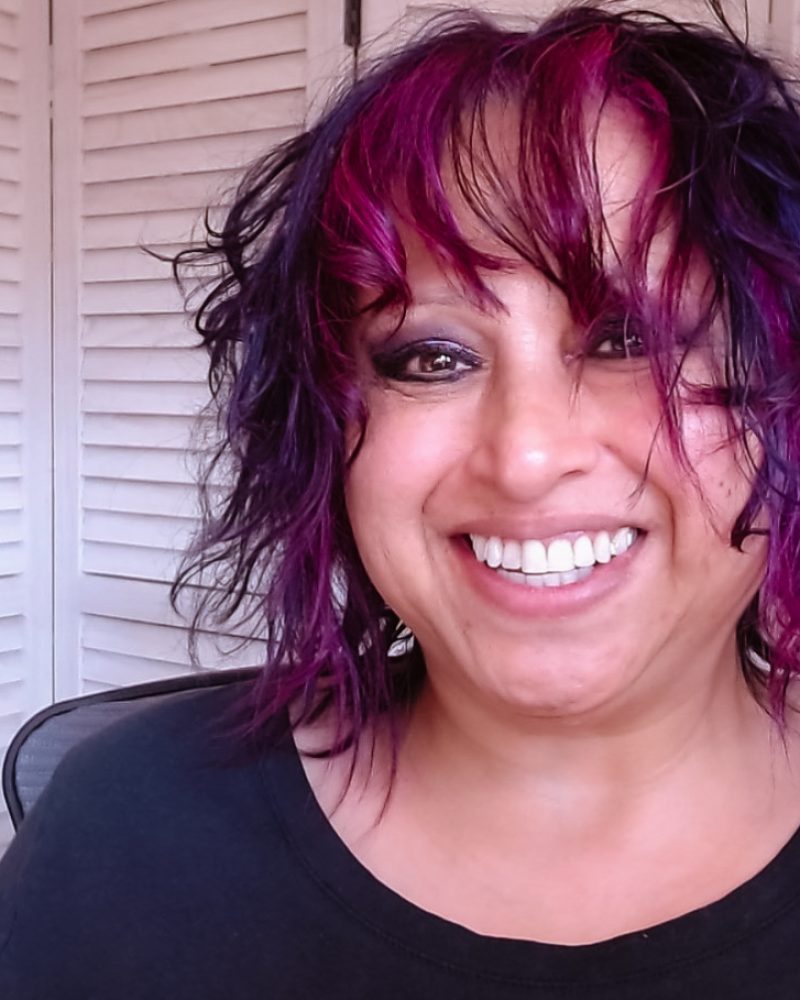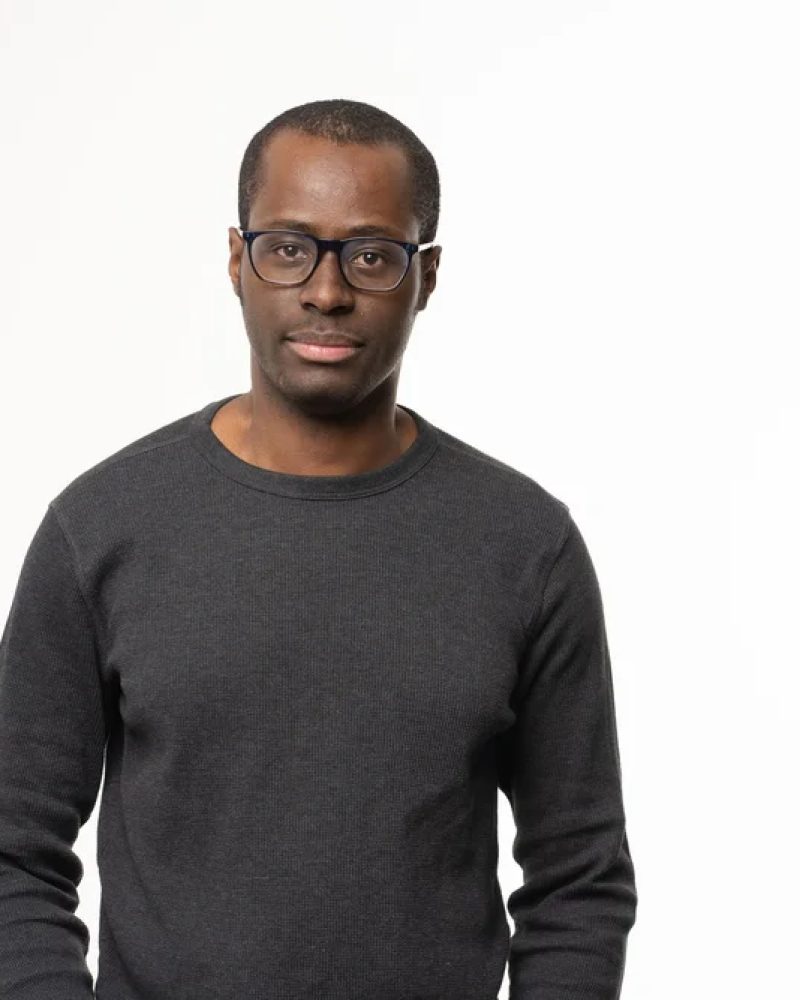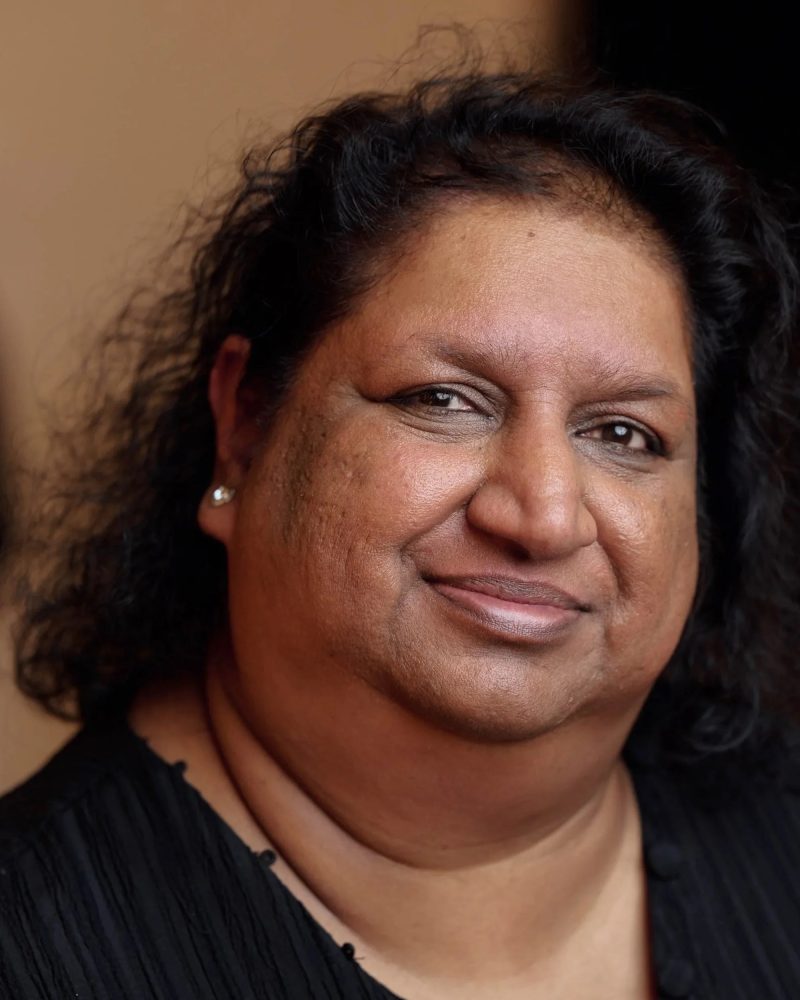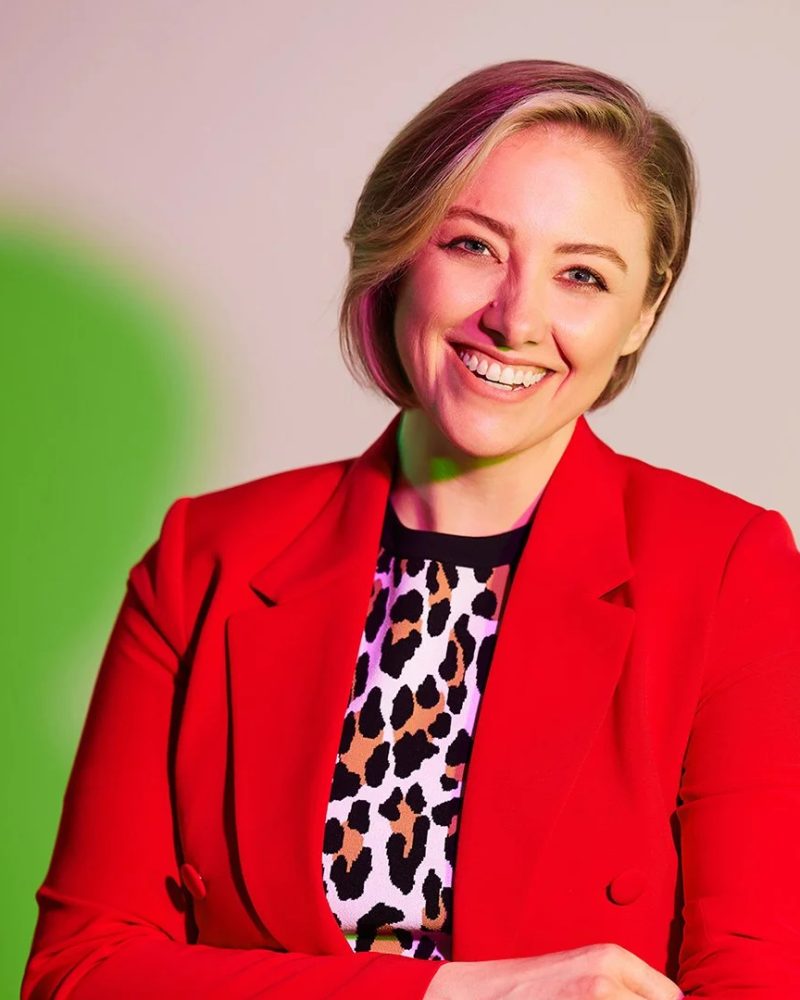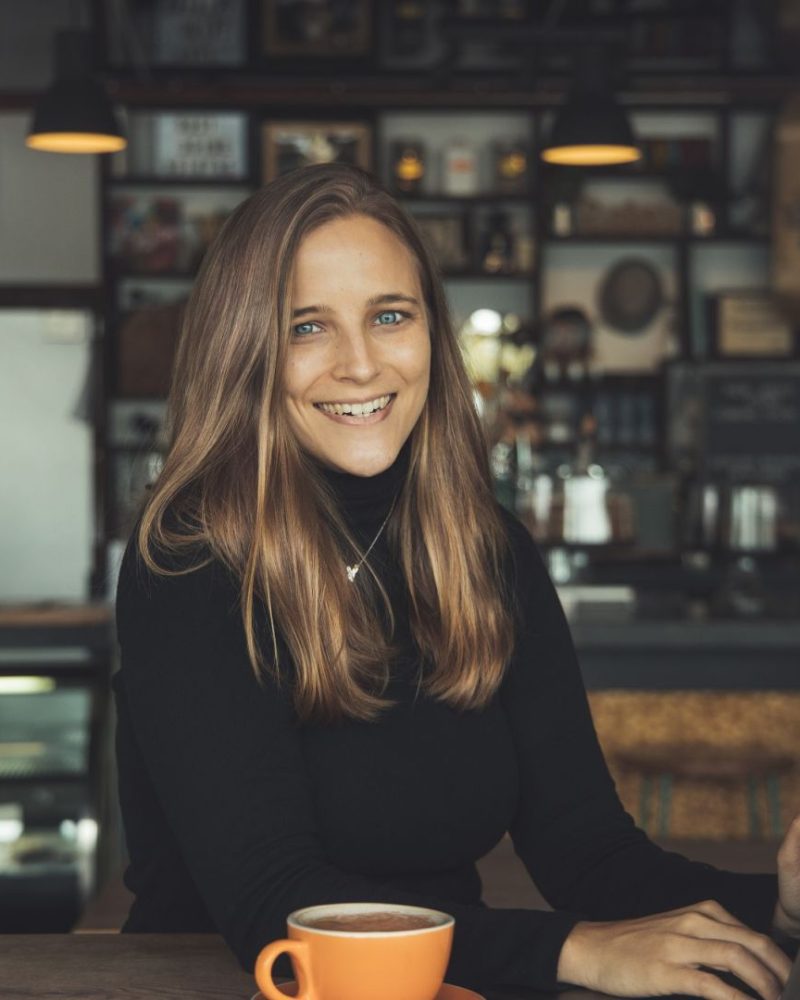
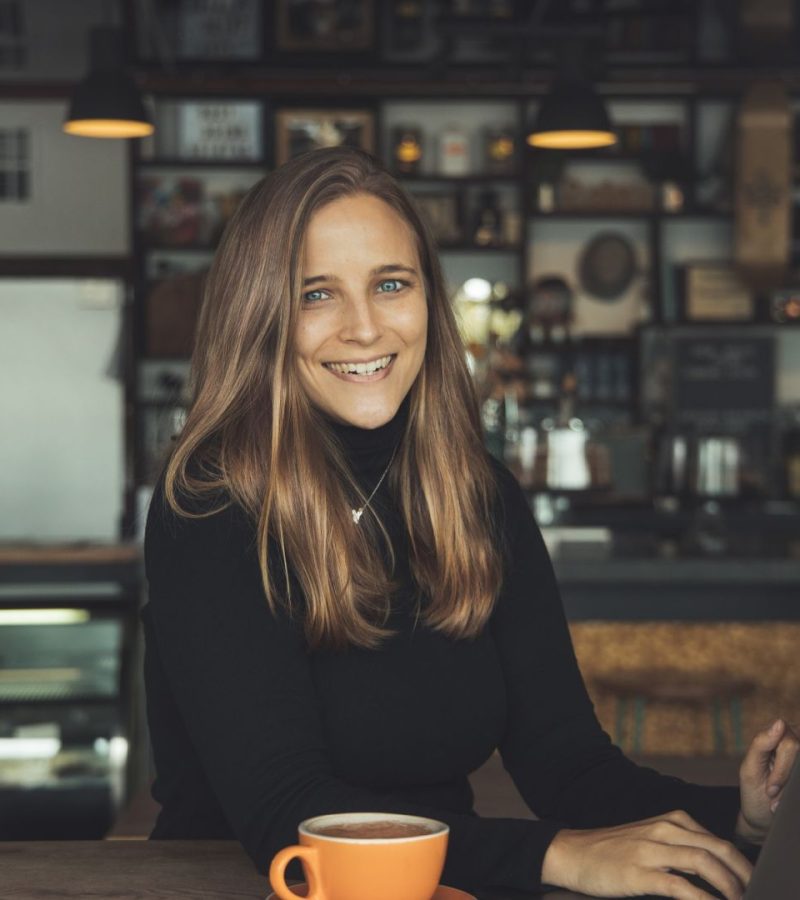
We explore how Cody Half-moon, Chief Marketing Officer at Lowell Observatory, transforms the daunting universe into captivating stories that resonate with diverse audiences. Her journey from marketing in oil and gas to leading science communication offers powerful lessons in making complex subjects approachable and inspiring curiosity.
Cody shares how she makes complex astronomical concepts engaging and accessible through storytelling and innovative marketing strategies. Discover how a passion for history, curiosity, and audience participation can turn scientific wonder into compelling narratives.
This episode offers a blueprint for turning complex science into accessible stories that ignite curiosity. An essential strategy for educators, communicators, and institutions aiming to inspire the next generation of explorers.
We discuss:
The origins of Cody’s passion for marketing and science, and the unique path that led her to Lowell Observatory.
How her agency experience and entrepreneurial spirit shaped her approach to science communication.
The innovative process of launching the Star Stuff podcast, turning cosmic facts into engaging stories.
Strategies for making complex topics like black holes, the Big Bang, and celestial mechanics accessible to non-experts.
The importance of co-discovery in science outreach, involving audiences as active participants.
Lessons learned about stakeholder buy-in, especially in traditional institutions and nonprofits unfamiliar with digital storytelling.
How audience interaction, casual conversation, and storytelling break down barriers to understanding.
The value of curiosity, wonder, and transparency in sharing science—inviting questions rather than delivering lectures.
Practical tips: meet your audience where they are, tell stories with energy, and embrace the wonder of discovery.
Cody’s future plans for the podcast and digital outreach, emphasising sustained engagement and storytelling expansion.
Chapters:
00:00 Introduction
05:22 Starting at Lowell
06:49 Favourite room in the observatory
09:24 Facts about the observatory
13:40 Inspiration behind the podcast
15:46 Results from making a podcast
17:08 Getting stakeholders on board
19:49 Objectives for the podcast
22:15 Creative approach
26:47 Building a community
30:57 Improving your network
33:24 Future of Star Stuff
Resources:
Guest Links:
Christina Moore (00:08)
Warning, this episode might give you vertigo. Today, you’ll learn how you can make complex ideas engaging even in an industry people find intimidating. When you’re marketing a business, you are constantly looking for effective ways to create awareness and build trust with your audience. Seth Godin says, persistent, consistent and frequent stories delivered to an aligned audience will earn attention, trust and action. And yet, week after week, I meet marketing leaders who are afraid to take the necessary steps because their industry or product is complex. Well, there are very few things more complex than astronomy.
Today, I’m talking to the CMO of the Lowell Observatory, Cody Halfmoon. Yes, you heard me correctly. Her name is Cody Halfmoon.
Cody Half-Moon (01:17)
My name is Cody Halfmoon and I am the Chief Marketing Officer at Lowell Observatory, which is a historic observatory in our south of Grand Canyon here in Arizona.
Christina Moore (01:31)
I just say you have a fantastic surname. I’m sure people have told you that before, especially given the job that you do. It’s like, I’m sorry.
Cody Half-Moon (01:31)
Yes. Yep. Yeah. And it was a great birthday gift. And the funny thing is, is someone on my team, actually the woman who helped me set up for this podcast, her last name is Moony. And so, yeah, it’s just Kismet. We were just meant to work here.
Christina Moore (01:58)
Cody’s career began as a freelancer through marketing departments across Texas. Each move upping both the challenge and the paycheck. She thrived on the constant stretch, taking on new roles, new industries, new puzzles to solve. She loved it. Every time a contract would end, a few clients would call her back. Could you keep ghost writing for our exec team? Would you take on this SEO project? And every time Cody said yes.
Pretty soon there were so many people asking for her to continue. She realised she didn’t need a boss. She could be the boss. Fast forward eight years and Cody’s running her own marketing agency, a 40 client operation with an all female team, covering everything from web design to social copy and brand strategy. She hadn’t planned it that way, but it became one of the things she was most proud of.
Cody Half-Moon (02:57)
was a full team. was really, really exciting to do. was super varied too. We’d have manufacturers and people in science, real estate brokers. I mean, it was all over the map for the kind of clients that we would serve. ⁓ But yeah, and as my team had to grow, I became more of a salesperson where I’d have the initial contact with the client and then do all of the admin and legal and… you know, accounting and everything. So that’s where I was like, I miss doing all the creative stuff.
Christina Moore (03:32)
Running the agency had been exciting, but the role kept creeping further and further away from what Cody actually loved. The business was thriving, but she wasn’t. Success didn’t feel good anymore. So she took a step back. She left Texas and moved to Flagstaff, a small mountain town in Arizona where she’d love visiting for short breaks. No grand plan, no five year roadmap, just space, magical scenery, and time. The town had that old world charm, the kind of place that feels untouched by time. And that’s when the next chapter found her. Not long after she had arrived, someone in town mentioned that the Lowell Observatory, yes, that Lowell where Pluto was discovered, was looking for someone to lead their marketing team.
Cody Half-Moon (04:24)
Well, I knew about Lowell from just being a tourist in the area. it’s, I mean, it’s been around since the 1800s and in America, that’s like ancient. That’s really old. So I visited there a few times and I had already been talking to my team about how I really wanted to transition and not own a business anymore. And we were already in the process of making that change.
And the original idea was I was just going to kind of lay low, maybe find like an easier job for a while, take a break because I worked every hour of every day. I’d often fall asleep under my desk and wake up for an early morning meeting. I mean, it was, it was so much. And I had, you know, someone here in the town, Flagstaff, I had just moved here, said like, ⁓ know, Lowell Observatory is looking for someone to lead their marketing team.
Christina Moore (05:24)
Spring 2021. Do you remember that? The world was desperate to escape the planet, but since rockets weren’t an option for most people, we settled for the next best thing, the internet. At the Lowell Observatory, that meant experimenting with new forms of digital content, live streams, virtual tours, anything to connect people to the cosmos from their living room.
It was a welcome break from the endless news cycle and the daily death count. Cody, with her background in digital marketing and storytelling, was exactly the person to lead that mission. I asked her what it was like walking through the observatory in those months when the telescope still turned, but the halls were silent.
Cody Half-Moon (06:15)
it was wild because I had always worked. you know, very corporate environments, very like glass and metal buildings, headquarters, that kind of a thing. And I’m, you know, retracing these historic steps from like the man who discovered Pluto or seeing a telescope that’s, you know, 120 plus years old at that point. I had this immense awe and respect for just I’m walking to my office and it’s where the founder had his office in the
Christina Moore (06:49)
What is your favourite room within the observatory?
Cody Half-Moon (06:53)
But I would have to say that ⁓ the best building in here is the Rotunda, which was built in the early 1900s to look like Saturn. And ⁓ that was the founder’s wife’s favorite planet, Saturn. And it’s really, really neat looking. It’s this metal dome, and it looks like something straight out of a 20s movie with like plated metal. in this big old dome. It’s really, really magnificent looking. And we use it to store some historic objects and ⁓ displays. ⁓ And then the Clark telescope because it’s so old. It’s so big. It’s so heavy. It’s like one of a steampunk. It’s truly Victorian. It’s really cool. And it’s so big and old that in fact, it actually scared me the first time I walked in there. It made me nervous. just to be around something that can see so deep into the sky and that’s so old and so heavy and big, ⁓ that they offered for me to look through it. And the first time they offered, was like, no, that’s okay.
Christina Moore (08:02)
Were you worried if you touched it you’d break it?
Cody Half-Moon (08:02)
It’s intimidating. No, it was like, ⁓ it was almost like it was so what it was looking at was so great and, far away that it almost made my stomach get like butterflies. ⁓ Like seeing the moon that close, it makes me feel like I’m going to like fall into space. I mean, it’s so amazing. We have people this old telescope from the 1800s. We have kids go up and look at Saturn. And it looks so insane and surreal that they think that there’s a sticker that they’re looking at a sticker of Saturn. And to see something that up close is not something that I’m used to because I grew up in basically the swamp. Houston, Texas is right off of the Gulf Coast. It’s very humid, ⁓ not particularly good for stargazing. And ⁓ I had just never experienced anything like that. And I was almost afraid of how vast the universe was and seeing it in such a real way through such an ancient piece of history, it was just all a little overwhelming. And I was like, I can’t do it.
Christina Moore (09:13)
But that’s a real thing though, I think that ⁓ the vastness and also strangely the intensity of the universe gives people real anxiety.
Christina Moore (09:25)
This is a real thing. It’s called existential vertigo or sometimes cosmic vertigo, not a clinical term, but one that pops up in science communication circles. It describes that dizzy, disorientating feeling you get when you suddenly realize just how small we are in the universe. The BBC even made a podcast about it, aptly titled Cosmic Vertigo. Cody says she eventually got used to that feeling. She acclimatised to the scale of space.
Christina Moore (09:59)
when you initially started, what was a fact that you came across that absolutely kind of blew you away? And actually it’s one of the facts that you kind of tell at dinner
Cody Half-Moon (10:11)
And there are so many mind blowing facts. In I’m a huge fan of astronomy. now I’m learning crazy things like ⁓ the rings of Saturn are younger than the sharks, prehistoric sharks and things like that, putting it into context where you’re like, what? No, that’s wild. like the the way that my favorite one that I still say today that I learned really early on was that the way that we figured out that the Big Bang, the you know, that our universe is expanding was almost like I think a lot of discoveries in science, almost an accident. There was a telescope and the lens, we were, it was like on loan at Lowell. We were loaning it and we broke the lens and we were like, Oh my God, we’re so sorry. Can we pay for this? And the instrument company is like, don’t worry about it. And the director at the time said, okay, we’ll just buy your most expensive instrument, whatever instrument that is. We’ll, we’ll purchase it. And it was a spectrograph. We’d no idea how to use it. We had asked around in other observatories, how do you use this? And we were known then as the alien hunters, because that’s what Lowell was founded looking for were Martians and we coined the term Martians and it was this whole media thing. And they’re like, we don’t really want to be associated with you, which I can say, because now we’re very close friends with like Lick Observatory and all of those ⁓ pioneers in the area. our one of our scientists, Slifer was using it.
Christina Moore (11:56)
She’s talking about Vesto Slipher, who was an American astronomer who performed the first measurements of radical velocities for galaxies. You can look that up in your own time because I’m not qualified to talk about this any further.
Cody Half-Moon (12:13)
and realised that there was an object that was speeding toward us. And it didn’t make any sense how fast it was going. And it was so big. It didn’t make any sense. And he took it to a conference that we still go to. ⁓ It’s called AAS, the American Astronomical Society. We go every winter. It’s one of the oldest conferences. And Hubble was in the crowd and heard this. And after a bit more research and studying other objects and the way that their light is, blue shift or red shift, realised that the universe was expanding and the object that was headed toward us was Andromeda Galaxy, which is eventually going to collide with the Milky Way Galaxy and become, yeah, it’s headed toward us right now. It’s gonna crash into us. I know, I know, it’s like, it’s ridiculous.
Christina Moore (13:04)
What happens after that?
Cody Half-Moon (13:06)
Then there will be more stars in our sky and that’s it because spaces is so unfathomably large that all it will look like is our night sky will be flooded in stars from the Andromeda Galaxy
Christina Moore (13:22)
That’s reassuring, I’m going to say.
Cody Half-Moon (13:23)
It’s reassuring. And you know what? Even more reassuring is before that happens, our sun will supernova and explode and we won’t have to worry about this anyway. What a relief.
Christina Moore (13:33)
Well, we may or may not still exist.
Cody Half-Moon (13:39)
Right.
Christina Moore (13:40)
You can hear it in her voice, that mix of wonder and disbelief that space tends to pull out of people. But for Cody, those wait what moments weren’t just fun facts to drop at dinner. They were proof of something bigger, that curiosity could be contagious if you gave it the right medium. That’s where the idea for Star Stuff was born, a way to turn all the cosmic wonder into stories.
Cody Half-Moon (14:10)
The marketing team had begun doing live streams, ⁓ interactive stargazing where you could get on YouTube live and look through the telescopes and request objects. They highlighted different celestial events and they were getting a lot of traction. And so the question was, what else can we do online? I was like, well, we could start a podcast about all of this really interesting stuff, because I was learning all of these incredible facts from a science communication standpoint. I was like, this is gold. This stuff is mind blowing. mean, every other word out of the scientist’s mouth, I’m just like, no, wait, what? What ⁓ is absolutely ridiculous. And the more that I learned, the more that I was like, we need to share all of this stuff. And it’s so difficult to share some of these concepts without a conversation. ⁓ Sharing some of these concepts in an Instagram post are really good for quick little facts, but for the context or the storytelling element, ⁓ you know, I thought, well, podcasts would be a good way to do that. And so we started it up. ⁓ three months after I joined the observatory and ⁓ kind of expected a lot of the people that were gonna listen to it were people that were already subscribed to our live streams on YouTube. And just another fun way to engage with the people that were watching our live streams and give them more free content to enjoy. And we did not expect it to go where it went. And it was, you know, I think… over 150,000 listens now and for a while it was number nine in astronomy podcasts in on iTunes and stuff like that was like we were not expecting. We were not expecting that even at the conferences. Like I mentioned the AAAS conference, the society that we go to. I still have people coming up to our booth saying like, Oh, you’re in star stuff. You’re the host. And I’m like, yeah, yeah, I am. So people really wanted that content.
Christina Moore (16:16)
I tell people all the time, like your podcast audience is going to be different from the audience that you normally have or the clients or the visitors that you normally have. It extends your audience. It doesn’t shrink. doesn’t take away. It doesn’t cannibalise. It extends your audience.
Cody Half-Moon (16:34)
And I think you’re right, they were people that would not have heard of Lowell Observatory otherwise. And we’re looking for fun conversations about space that were a bit more casual and easier to understand. ⁓ And it was, yeah, it just completely took off and it attracted a lot of students to want to work at Lowell in astronomy fields. And people that were casual astronomy fans that now were like, ⁓ you know, I want to come up to Lowell Observatory and see the place where some of these stories happened. So it really worked.
Christina Moore (17:08)
what I’m really curious to know, especially when it comes to ⁓ older institutions? is how you got your stakeholders on board with the podcast.
Cody Half-Moon (17:19)
It was, I think it was one of those things where it was new enough and considered like a younger audience that, and I think the advantage of me being new and bringing in a new sort of idea, I think maybe it was a little bit of, ⁓ you know, ⁓ well, we’ll entertain the idea. And ⁓ one thing that we did not know, and if we knew, to be fair, how much work it would take to do it well. I don’t think it actually would have been approved because I was like, how hard can it be? You know, we have the content, we have people who specialise in sharing this content with our guests. We have scientists and we want to highlight our scientists more. It would be so easy. You hook up a mic and you talk to the camera and you have a conversation. my gosh, it was. We didn’t know what we didn’t know and I think that was an element too where they’re like, yeah sure why
So I think what I did was I put together what I did know and I proposed this idea with all of the steps already. As much as I could think through, thought through, like how we would get it up to Spotify and iTunes. ⁓ what the objectives were, who would be on the podcast, a list of ⁓ initial interviews and topics that we would have. And ⁓ luckily I had a leadership team, especially over our education program who was on board with trying something new in sharing science. ⁓ usually I could sell it by saying, like, have you ever listened to a podcast? And most people are like, Yeah, I have listened to a podcast. So it’s like, great. So, you know, what our audience looks like. ⁓ You know, people listen to podcasts, it exists. This isn’t some sort of risky thing that we’re trying. This isn’t something that people don’t know about or haven’t heard. Everybody knows podcasts. And as long as you market it well, ⁓ you know, I think that there’s an audience for this.
Christina Moore (19:51)
And what were your objectives for the podcast? What did you want to achieve with it?
Cody Half-Moon (19:55)
Well, when I did my initial market research, I saw that there were a lot of really good podcasts already. ⁓ and they felt as apart from Neil deGrasse Tyson’s podcast, ⁓ everything felt which he’s fantastic. He’s a great science communicator. ⁓ They felt very ⁓ almost too formal. So they felt like a news report, or they had language that was difficult for me who was just learning the, you know, the industry and the lingo that I didn’t understand.
And it felt like a lot of it was catered to audiences about like Gen X and older and not really catered toward a millennial or Gen Z or anything like that. And that’s an audience that as you know, everyone’s always trying to figure out like, how do you reach a younger audience? And one of the things that I like to think about in marketing is meet your audience where they are. And if the audience is here, and you want to reach them, you can’t make them come to you. You have to go where they are and talk to them in language that they understand and not language that, you know, someone else wrote in a textbook. So that was kind of my initial objective.
Christina Moore (21:08)
And you structure your episodes in a way that is casual, right? So I know you do a lot of prep work behind the scenes.
Cody Half-Moon (21:15)
We do a lot of prep work, but it is structured to sound casual, conversational, and fun, but also informative. So we do a lot of prep before we hit record, but the recording itself, we don’t read scripts. It’s very much a conversation. And that’s the style that we, I think, our audience really enjoys. They want to hear someone who’s like, curious, exploring, asking questions. They want to be able to learn alongside us. And that’s the concept of co-discovery. So we want them to learn alongside us, not at us.
Christina Moore (22:49)
That balance between preparation and casual flow is tricky. And I want to ask you about audience involvement. You have that segment called “Actually.”
Cody Half-Moon (27:12)
Yeah, “Actually” is where we answer listener questions, feedback, things that they want to know more about. It’s part of our co-discovery approach. It encourages engagement and makes listeners feel like they are part of the learning process. It’s not just a broadcast; it’s a conversation.
Christina Moore (30:57)
That approach really humanizes science and makes it accessible.
Cody Half-Moon (31:22)
And it’s been a huge benefit for Lowell. We’ve connected with scientists and high-profile guests like Alan Stern and Adam Nimoy, and it’s inspiring students and casual astronomy fans alike to engage with the observatory. We’re now planning monthly episodes for season four to keep the content sustainable and fresh.
Christina Moore (33:29)
So the takeaway here is that complex subjects aren’t the problem—it’s how we communicate. Cody’s approach invites curiosity, emphasises co-discovery, and encourages audiences to learn alongside her. Instead of broadcasting information, engage people, let them ask questions, and make them part of the journey.
Christina Moore (33:58)
If you’re marketing something complex—product, service, or mission—invite your audience into the process. Let them wonder, ask questions, and say, “Wait, what?”
Explore other episodes from our podcast series to stay updated.
Gain fresh insights and inspiration with every new conversation.