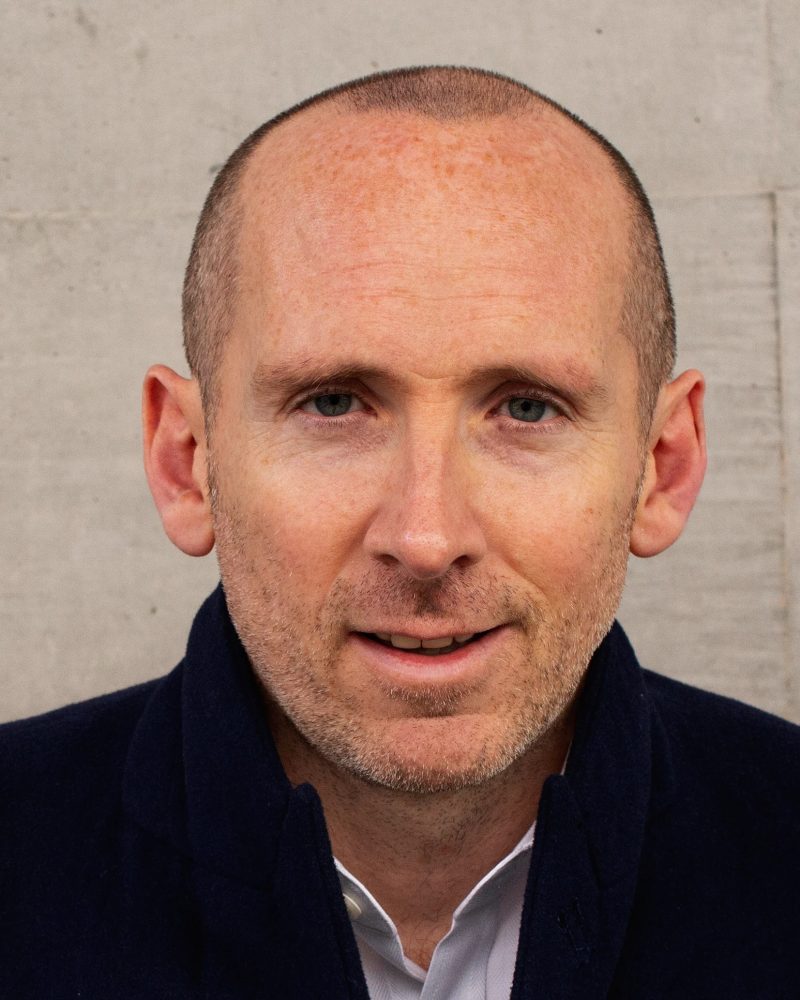

Can trust become a KPI? We explore how trust has become the most critical KPI for brands, surpassing traditional metrics like engagement and attribution. Katie Howell shares insights on building social trust, measuring it effectively, and why consistency and authentic relationships matter in today’s noisy digital landscape.
Main topics covered:
In this episode:
Chapters
00:22 Why trust is becoming the most important marketing KPI
03:18 Challenges faced by senior marketers in measuring trust
07:21 Case study: Fujitsu’s trust-building video interviews
09:58 The three-layer model for measuring social media impact
12:27 Attention metrics: reach, demographics, and content fit
17:19 Using social listening tools like Brandwatch for audience insights
19:58 Testing content pillars and hooks rapidly with social data
21:36 Creating long-term relationships through consistent visibility
25:02 Nurture sequences and mini touchpoints in content strategy
26:27 How expertise, humanisation, and participation build trust
29:51 AI as a trusted source in consumer decision-making
39:17 Trust is a non-soft KPI that directly impacts revenue
40:08 The mindset of continuous learning and curiosity in a fast-changing world
41:16 Final thoughts: trust over virality for sustainable growth
Resources & Links:
Connect with Katie Howell:
Christina Moore (00:22)
You’re a CMO. Your team has produced a steady stream of content. The metrics look respectable, engagement is decent, but something feels a little off. You’re not completely convinced that attention is turning to trust. And without trust, attention doesn’t mean very much at all. In this episode of A Mind For Marketing, I speak with Katie Howe about why trust is becoming the most important KPI in marketing. Because while technology keeps changing how we reach buyers,
one thing hasn’t changed at all. People still decide who to trust and increasingly the brands that succeed are the ones that understand how that trust is built.
Katy Howell (01:10)
I’m Katie Howell and I run a company called Immediate Future and we’ve been doing social media for, in fact, we’re over 21 years, nearly 22 years back when, oh, we were a twinkle in Jack Dorsey’s eye when Twitter was really Twitter. And we work with brands like Sony, Diageo, and some of the fintech and B2B tech like Fujitsu and IBM. My whole world is all about social trust.
and how to turn it into growth.
it’s one of the most intimate forms of marketing. It’s so one-on-one. It’s mostly done with people with you in their hands and it’s very close screens. It can be very personal and the impact of that on brand growth, lead-gen everything along those lines is really, really amazing.
and I just love it. For me it’s all about the fascination with the way we behave as buyers.
Christina Moore (02:14)
One of the things that fascinated Katie early in her career was buyer behavior, not just what people click on, but how they decide who to believe. When you start paying attention to how people really make decisions, you realize that the current marketing metrics only tell part of the story. Trust is often the thing that determines whether someone takes the next step. And increasingly, it may be the most meaningful KPI we have.
Katy Howell (02:40)
trust is the new KPI. And what I mean by this is social is no longer just a place. It’s the room where buyers are deciding whether you’re credible as a business, whether you feel safe.
They want to feel confident as they bring your name up in an internal meeting that they’re not going to be shamed by somebody saying, they’re terrible or whatever. They want confidence in us. And I think that the challenge with trust as a KPI is that senior marketers are terrified of this.
because we’re being judged on things like numbers and pipeline and attribution. And the board wants all these kind of clean lines from a LinkedIn post, you know, all the way along till one revenue in. They want this lovely linear process. And we all know that the buying journey is messy as hell.
we know 95 % of buyers are out of market so when they finally are ready we need to be there convincing them or we should have already convinced them that we’re the least risky buy in the room and if you don’t measure trust and you keep underfunding that thing then you’re going to fail so it’s really important I think that
you sit social trust and growth together and acknowledge that fear about attribution. we can talk a little bit more about how we deal with that. And I think that this will leak from B2B where it’s very strong at the moment into consumer. We’re moving beyond the conversation right now about price. So price has been the big thing and it still is the big thing.
But along with price is trusting the brand. I need to trust that the clothes I buy have the same values as I have and don’t use cheap labor somewhere else. All these things are really, really going to start to come to the fore because we are watching our pennies and taking care of what we’re doing.
Christina Moore (04:55)
To understand this idea of trust, Katie uses an example most of us can relate to. When we buy clothes, we don’t just look at the price or the quality anymore. We ask questions about the brand itself. What does it stand for? Does it share the same values as me? Those same expectations are now showing up in B2B decision-making. Even when the purchase is professional, the decision is still human. And that means that the same trust signals that influence consumer brands
increasingly influence business relationships too.
Katy Howell (05:27)
the key to trust in B2B is definitely a level of thought leadership. But in terms of thought leadership, ⁓ trust is won slowly, credibility is won quite slowly, respect is won slowly. It’s never, you don’t just run a campaign and go, we’re trusted now. It has to run through everything.
So the joy of thought leadership is thought leadership is never, never ending.
Christina Moore (05:51)
And can you do you have any examples of where your team is kind of like built trust really effectively in social media?
Katy Howell (05:59)
And one of our clients, Fujitsu, we ⁓ worked with them to create ⁓ video events where we had panel interviews at one of their big, they have a big forum every year. by the key to this was to ask the questions that the customer would ask that build the trust, not ask the questions that Fujitsu wanted us to ask.
but the questions that the customer wanted to ask. we ran this very pithy, very looks very, you’ve been at the BBC, very BBC Red Sofa, kind of the business interviews that you see on the BBC, very similar style. And we ran those on Facebook because we wanted to get Target C-suite and the C-suite don’t really hang out on LinkedIn, unsurprisingly, not large enterprise businesses, they don’t, but they are, you know, on Facebook.
to family and friends. So we ran it looking like a BBC program, so it caught their attention. So it wasn’t dry and boring. We asked the pithy, punchy questions that customers wanted to ask, you know, why does my legacy system not connect well with the new cloud systems or all these really detailed, itchy questions that we knew CTOs, CIOs, CEOs.
CFOs, all the Cs would ask. And they went down phenomenally. Some of those videos ran 16 minutes long and people watched all the way to the end. But the outcome of that and the trust metrics we’ll talk about in a second, resulted in a pipeline after 12 weeks of 38 million. So when I say it works, it works. But…
Christina Moore (07:44)
Wow.
Katy Howell (07:50)
Trust is not won overnight. And my God, if I’m really honest, it’s a lot of work. You have to be very deep and very thoughtful. It’s about quality content over the stuff we usually see on social media.
Christina Moore(08:08)
Right. So this is something I live by when we’re producing podcasts. I’m so pleased to hear you say it because every time I do a discovery call and let’s say, let’s say for instance, that an enterprise or a business has already started making their podcast. I can guarantee you.
That is most of the time it’s told from the perspective of the business. So here’s what we do. Here’s what we have. Here’s how we do X, Y, and Z.
to remind them every time your audience doesn’t care about you. And it’s harsh, but they really, really don’t. They don’t care about your CEO. Unless your CEO does something scandalous. They don’t care about your CMO. What they want is to have the answers to their questions answered. That’s what they want from you. they want to know
Mostly how you can serve them. It’s always the what’s in it for me, like always.
Katy Howell (09:09)
Yes.
Yes,
yeah and more importantly how can I help them today not sometime in the future to think about something in a different way that will help them win today because marketing is tough right now it’s a tough job pre-internet you know when I started your chartered institute of marketing diploma had seven channels
those things.
Christina Moore (09:39)
⁓
to be there. Yeah, exactly. Seven channels. Awesome. Yeah.
Katy Howell (09:41)
Now we’re in a hundred, so no surprise. Your average
CMO is overwhelmed, ⁓ overworked and desperately trying to plug the holes like a, like a finger in the dam of a million elements in order to make this work. So we cannot shy away from where our customers sit. And so one of the things I feel really strongly is that if I can understand that, why can my clients not understand how their audiences are?
Christina Moore (09:47)
Yeah.
Katy Howell (10:11)
And their customers have changed so much in the last few years. The behaviors of our customer have moved radically. I mean, to give you an example, somebody fills out a demo form. They’ve seen your people on LinkedIn, not necessarily your company, but the people that are there. They’ve watched a TikTok maybe that talks about it might not be something you’ve done, but somebody somebody else going, you know, have you tried this CRM? I’ve tried this here.
They’ve heard you mentioned on a podcast, they’ve stalked your website, they’ve looked at your competitors, they’ve asked in WhatsApp groups, all of these messy, crunchy, there is no funnel. And more importantly, there is no single purchaser. So we not only have, as people have been talking about the buying group, but you also have the hidden buyer, the buyer that never speaks to you, the CFO, the procurement director, the
the CIO who sits behind the CTO who all have the power to veto. And this is where we have to get to if we want to be trusted. We have to know our audiences.
Christina Moore (11:22)
I have a lot of compassion for CMOs. They’re in a tricky position right now. So when in the market, when the markets are fickly which they are now, CMOs are the person that everyone looks to is like, how can you
improve the business and if you don’t improve your business you lose your job. So have a lot of compassion
how would a CMO go about, or even a marketing team in general go about measuring that trust and whether they’re.
accomplishing what they set out to do.
Katy Howell (11:52)
Yeah, absolutely. mean, the reality is that we need to be both grown up and a bit brave
Our internal stakeholders have got used to things like impressions, not that they understand what we’re talking about most of the time, but impressions and click through rates and everything else. They’ve got used to that. So what we need to do to actually prove value in social, you need to have a kind of a three layer measurement. The first layer is the attention and layer. And this is
You know, are the right people seeing you? Did that? this reach good for the amount you’re putting behind paid other views? Right. Are you getting the right job titles, the right demographics? Are you getting the right completion rates? All of that is what I would call attention and fit. So that helps guide your.
guide your kind of thinking about your content and knowing what works what doesn’t work. Layer two though is the trust and intent. This is where it gets rather interesting because we’ve gotten used to going we’ve got so many likes and so many followers. The amount of brands still going we need more followers and you think like we don’t need more followers. Might be different in podcasting you’ve got enough for social proof actually who cares because if you’re not putting paid behind it you’re not being seen and if you’re not ⁓
actually reaching out and having engagement. The engagement is the bit you’re after. And in fact, where it gets really interesting is that you should be looking at the number of saves you’re getting. How many times somebody is sharing it, where they’re sending it. You know, we have that whole dark social element to what we have, which is people sending it via WhatsApp. I mean, who hasn’t done that? And the amount of times I’ve taken a meme off of Instagram and sent it to my daughter.
you know, via WhatsApp. But I haven’t shouted about it yet that that stuff has been trapped. Of course it happens in B2B and we do exactly the same. We send it to our CTO going, have you ever had a look at this CRM system or this cloud system or whatever it is, we’re sending it to each other. ⁓ And so you want to be looking at repeat viewers on your thought leadership, brand search and share of search so you can lean it into your share of search.
searching for your name, your core ideas as a consequence of what you’re doing in social and mentions of your people and the kind of events that you’re running. So that’s layer two. And when those numbers move, it means your ideas are kind of sticking and people are quietly recommending you. Then layer three is the more commercial impact. And this is where we go. We connect. start connecting social to the CRM.
Track opportunities where the contact says they followed your CEO on LinkedIn or they mentioned your report so that you’re able to show the attribution from social. Monitoring meeting acceptance rates and also, by the way, you really need to look at accelerated deals. So are you pushing the deals through faster because or is it a bigger basket size or deal size? All of these things are what
trust impacts and it sits so quietly in the background.
that often it gets ignored because we look at those very end commercial impacts. I get it. That’s all your CFO is interested in. actually, as marketeers, we have those three layers and tweaking up and down. And the trick is really to stop pretending there’s only one magic number that proves it. We keep trying to give this magic number to people and there isn’t one. I hate to say it, there has never been one.
Christina Moore (15:39)
It doesn’t exist.
Katy Howell (15:41)
And if you don’t
Christina Moore (15:42)
Yeah.
Katy Howell (15:43)
do a mixed marketing model of some sort, then this three layer is your alternative.
Christina Moore (15:47)
You’ve done something there that my ⁓ quote unquote A type brain absolutely loves and you’ve categorized the KPIs and I just absolutely is like ⁓ a woman after my own
Katy Howell (16:01)
⁓ we all love that you’re
Christina Moore (16:04)
Up to this point, we’ve been talking about trust, but there’s another idea in marketing that has quietly shaped how brands behave online. The pursuit of going viral. Katie makes a point here that I found particularly refreshing. The obsession with virality was flawed from the beginning because most meaningful relationships with brands don’t happen through a single viral moment. They happen through repeated interactions over time.
Katy Howell (16:31)
So, you know, the reality is this idea of going viral was s**t to begin with. Sorry, excuse my French, but don’t excuse my French. It was terrible to begin with. It doesn’t actually move the financial needle. you know, as much as our lovely CEOs love to hear about it and tell their mates, we’re in the business of generating revenue for our business and growth for our companies and that.
That isn’t done by going viral. That’s done by consistency. That’s done by thought leadership. That’s done by showing the world that we are a trusted consumer brand. And if you look at those that successfully weather the storm of the current few years and you look at the brands that are making it through, it’s because we trust them.
Christina Moore (17:19)
Virality might get you some PR, but if ultimately what you want is customers and returning or repeat customers or clients, then trust has got to be your number one priority, I think, yeah.
how do you go about the process of getting to know the customer? What’s your process?
Katy Howell (17:41)
So I’ve got a real advantage over other sectors in marketing in that I can use social listening. So we use a tool called Brandwatch, which is fantastic, even better now that it’s got AI in it, which means all the analysis that used to take me hours 20 years ago now takes me minutes. So we use Brandwatch and we will specifically look, so for instance, if I was looking at cloud computing or…
Blue cheese, for instance, I can go and find out how the audience is really talking about it. It takes a while because it’s ⁓ unstructured data. And the other tool I use is Global Web Index, GWI.com, where I can put in there, we’re working with a golfing brand at the moment, I put in there, I want to find out about golf enthusiasts in America. And it will tell me not just where they are,
on social, not just all the obvious demographics, how old they are, what sex they are, all that sort of stuff. It will also tell me what they value, ⁓ what their attributes are, ⁓ what their attitudes to things are. And I’m able to pull all that information. that’s number one is there is data out there. And I did some really interesting insight on the fintech brands and where they’re playing and.
You know, the fintech buyers are really interesting, slightly weird crew who are even more trust conscious because hey, they’re in fintech. But, for instance, one of the really surprising things you see in fintech buyers is their fear over cyber security is probably 50-fold that of any other CTO or technical buyer. It’s just
off the scale. Yet when you look at most fintech, it talks about speed of payment, blah, It hardly ever talks about the security side of it. And actually, that’s the thing that’s worrying them the most. So this is what I mean. You find the nuggets. Then when you have those nuggets, there’s part two to this. And part two, again, my advantage in social is we can test and learn. And you can test and learn so fast in social, like in five days. You can work out which content is resonating, which isn’t. So what you might do is pick
three content pillars based on the audience that you’ve analyzed and say, right, I want to talk about one, which is, know, staying on the FinTech theme, fast payment system, easy deployment and cybersecurity. And then we can see what works, what doesn’t work. Because social moves so fast and you can push so quickly, you can very quickly begin to go, right, this is getting initial interest, this is getting the next bit and then off we go. So it’s…
It’s kind of a two-fold process, really.
Christina Moore (20:29)
I think that’s an incredible system. Potentially, you could use that to test podcast ideas. Like you could just kind of see those into the audience and see which one responds better. And then, yeah, yeah, that’s incredible.
Katy Howell (20:39)
Yes. Or even just not even the idea,
you can do it with a hook. So you might in this conversation, we’ve probably got three, three or four hooks. One might be measurement. One might be, you know, ⁓ what is trust? One might be fear of fear of, you know, changing the measurement to our our leadership stakeholders internally.
You can actually test those three messages. So you create the three messages with the three angles. You pull out the podcast, your audiograms that sit around and work out which drives the most traffic to your podcast and gets people to subscribe. know, I mean, it’s just, you could do it within a week. You’d know what the angle was that actually matters.
Christina Moore (21:21)
the idea that you would test perhaps episode ideas or program ideas using social market, I don’t think it’s very common and I don’t think it’s happening very often. So this has a, I’ll be in touch.
Christina Moore (21:36)
And when you think about it, this is exactly how relationships work in real life. You meet someone, you have a conversation, you stay in touch. Trust builds gradually. Marketing works in much the same way. The brands that remain visible, helpful and consistent are the ones that become familiar. And familiarity is often what creates trust.
Katy Howell (21:59)
And just like in the real world, when we go to a bar and we meet someone and all they do is talk about themselves. It’s really, really, really boring. And particularly if they don’t let you get a word in edgeways and you think to yourself, well, that’s a taker and we need to stop being takers as brands. We need to stop being doers and be kind and going, I can, I can show empathy.
Christina Moore (22:09)
Yeah, yeah.
Mm-hmm.
Yeah, yeah.
Katy Howell (22:29)
for my customer, yeah, instead of the, think all of these things in social get lost while we so desperately go, look at me, look at me, look at me.
Christina Moore (22:39)
Or churn or churn out content on a weekly cadence just to make sure that you’ve done the weekly cadence rather than just thinking about. Yeah, exactly. Yeah. Yeah. Yeah. There’s a lot of tick box podcasting as well. So after you’ve, this is a really interesting post processor. So when you’ve kind of like see those ideas on social media and seeing what’s come back to you or seeing what does better.
Katy Howell (22:44)
Yeah, tickbox marketing, I call it.
There is.
Christina Moore (23:09)
How do you go about actually producing more content that is relevant to the consumer that you’re targeting?
Christina Moore (23:17)
Before Katie reveals the process she uses, it might be worth checking something for yourself, the health of your own content. If you’re producing content right now and you’re not sure whether it has the kind of reach or influence, you can take our content power score. It’s a short assessment that shows whether your content is discoverable, engaging, and positioned to influence buyers across the whole journey. You’ll see what’s working, what isn’t, and what to fix first.
The link is in the description.
Katy Howell (23:48)
Well, I think it becomes really, it becomes really easy when you know your customer, but you have to do that hard, horrible graft first to get to that place. Otherwise it all kind of falls apart. So I think if we’re trying to get to this point where we’re trying to create content that actually works and builds trust, what you should be doing is looking at. So in your content pillar,
that feeds into that paying point. You start with trigger content. you know, be the star of your neighborhood. That’s the trigger. Like what? You know, I’m interested. What do they mean? Or outdo your neighbor with the Christmas decks. You know, that kind of thing is the trigger. And then what you have is nudge nurture. And that, you know,
can be anywhere between nine and I’ve just heard recently 32 touch points to get an action. Yeah. So you need to be creating a whole load of nudge nurture. Now in the world of B2B that’ll be case studies. That might be your CEO talking about why they got into the industry. That might be your CTO talking about the problems of legacy systems fitting with other legacy systems. Could be whatever. But the point being is that this is answering all those little mini pain points that sit around it.
So you have to value exchange and the value exchange of course is something like a demo or it could be something they download or it could be a meeting or it depends on your business, of course. In consumer and particularly in FMCG is carrying around the brand in your head because nobody walks around looking at social media when they’re in Sainsbury’s. So that I remember that I would rather buy mission wraps even if I have to bend down because I understand that these are the only wraps that don’t crack.
when you roll them and I want to roll them. So that message has to be drunk. So memory is everything alongside trust. So how do we do it? You have to be very practical and we tend to follow on five, six again, you know, categorizing everything. So expert answers posts where you answer real questions. Always good to go and talk to your sales team at this point.
and go, what are the questions people are asking? So in B2B, it’s easy. You can go to your sales folk and say, what are the questions that you get asked the most? Is this integrated with blah, blah, blah? if this is a CRM system, can I send emails through it or whatever it is? What question do you get asked the most? then in consumer, it’s almost the same. It’s like really thinking about what matters. It could be.
So right now we know consumers want fast, quick meals that are warm But what matters is I don’t want to spend hours in the kitchen. So the quick bit is a really important part. So it’s understanding that. So expertise. The second you need to prove you’re human, so that means using lo-fi use cases, try not to be over-polished. ⁓
in hardcore cyber or fintech via communities. Sometimes some of the stuff is so polished, it doesn’t say anything, doesn’t do anything, doesn’t make me feel anything. ⁓ But more importantly, put your people out in public. Because people trust people.
So that’s important. Host their take on the industry, your thought leaders, not culture content, but people talking about what they do, how they do it. I always remember there was a FedEx, it was American thing, but a FedEx campaign, which just celebrated all the delivery folk.
you know, that we’re out there doing extra things. I mean, there’s nothing to beat credibility than having your own people out there. And then making sure that you’re driving some level of participation. Otherwise, you do look like you’re just broadcasting polls, open questions, getting into the debate.
So finally, do think long form stuff, and we don’t deal with long form particularly, but long form is really important alongside understanding how the AI buyer has become significant. Let me explain one last thing on AI buyers before we go into this, we should talk about this topic. And that is everybody thinks the AI buyer
B2B and it is people are shortlisting. Okay. There’s no two ways about it. We’re going into GPT or Claude or wherever we are. And we go, what are the five top companies to do podcasts? And if you’re not appearing, you’re not there. They’re not even searching for you again. It can even do the whole analysis in a lovely table saying, this is what I want. This is where I’m, what I’m interested in. want, I don’t want the cheapest. I want somebody with a really nice voice and blah, blah, blah.
it will go and do all that work for you. So now they’ve bypassed Google. They may well, and they often do go to social media to check you out, to see the real you. But where people get it wrong is they think it’s only B2B. But let me give you an example. My son is coming with his girlfriend. My son is vegetarian. We’re not. His girlfriend doesn’t eat rice, doesn’t eat anything with texture.
and I said, I have to make dinner. I’m going to only buy from Ocado plan my meals. And it did. It went and sourced everything against my purpose. So tell me this, if you were M &S who are on Ocado
Or if you are Waitrose how quickly have you been excluded from my shop? Yeah. And how fast have I pulled together? And that I did it in minutes and then pulled together a nice menu that I can make pretty and send to them. And that’s what I mean is you cannot ignore AI as being the trusted source of information. Really important to use that word trust in there. In other words, people believe what they’re being told in GPT.
Christina Moore (29:51)
Yeah.
Yeah, yeah.
And consumer behavior as well, regardless of whether it’s B2B or B2C, what you were looking for is the quickest route to get what you wanted. You didn’t care that you weren’t going to spend hours up and down the aisles in both Marks and Spencer’s and Waitrose. That wasn’t your concern at all. It’s like, my son is coming with his girlfriend. I want some ideas and I want them quickly. Thank you very much. And then I was like, here you go.
and served it to you.
Katy Howell (30:24)
mean, what used to take me hours of planning when the kids came home now takes me minutes. And better still, it then wrote me a shopping list, my point is that everybody is doing this now. You know, if they’re buying a car, you’re going to use AI to go, I’m thinking of this, what’s wrong with it?
questions should I ask people just getting more and more used to doing this. And that element means that trusted source, whether you agree or don’t agree is AI because we just don’t have the head space for it anymore. How do we as brands get in there? How can I be a food brand that when someone types in, please write me a menu for the week, quick meals for two kids, blah, blah, blah, blah, my recipe comes up.
with my product in it. How do I make sure that that happens? Well, that’s part of your website, but it is also social media. And where people get it wrong is things like your alt tags, your metadata, your ⁓ nomenclature or naming of your visual assets. All of that goes into what AI pulls. We know AI pulls information from Instagram. We know it pulls, but it’s the metadata it pulls.
So what is your metadata? And so even just a simple admin change at your end of how you’re uploading to social media could make a massive difference to how you appear in AI engines or answer engines as they’re called.
Christina Moore (31:55)
Yeah, I’m very, very excited about this space. And I briefly worked in it. So I worked for a company called Curio and effectively what they have done was created this kind of co-pilot, which served the news. So they had a bunch of partners ⁓ and when the consumer kind of typed in questions in regards to news stories that were out, it then served them.
an explanation, maybe even a bit of a summary and then the articles that were relevant to them, which meant that whoever wasn’t in this co-pilot or who wasn’t a partner in this pilot, their articles were never ever referenced. They were never ever come up. And I think this will happen more and more, not just in terms of like chat, GBT and Gemini, but I think it will happen in the various
other types of apps that will be created in the future. I think it will give us, I think there’s massive opportunity here. I know there’s a lot of fear around it because at the moment a lot of the metrics seem as if Google is stopping traffic, but it’s not really stopping the traffic.
It’s the most relevant in the most relevant businesses that are being surfaced. So that’s all it’s doing. It’s just saying, Hey, we’re just picking the most relevant. And it also, if you look at Google search, it will have like the links of where it’s taken source that information from. So yeah.
Katy Howell (33:30)
Yeah, yeah.
It’s not an either or, it’s, this is what I mean about embracing change. So, okay, this is where we’re at. And, you know, I read somewhere that probably in a couple of years time, apps won’t exist because everything moved pulled through APIs. So, but does it matter? Because here we’ve got another opportunity in the way that our customers prefer to buy. And I know we don’t like that, but we are customers too. And, ⁓
So we know that AI is summarizing before your buyers even come and see you. We know that they tend to use social and AI together. We know one feeds the answer engine, the other is discovery and credibility. And we know that what they’re doing is putting into AI a very random question, much more natural language question. So one of the things every marketeer should do after this podcast is list out all the questions.
that your customers likely to ask around your products. Yeah, all of them, and make them all the way down to the minutiae and then start publishing around each of those questions, both on social and on your website. in as many places as you blooming well can. know, FAQs is a great way of getting around it. Frequently asked questions when it comes to blue cheese. Where does the mold come from? Where does the, you know, all of this stuff, right? And in FinTech, the same thing.
How long to deployment? Every single mini question, because that is what people will put in there. And your answers should be no more than about 50, 60 words. The same summary that you see in AI. The idea being behind it is that when it gets picked up by the engines, that you’re mentioned alongside it, either by name or as you rightly said, in Gemini with a link or, you know, if you use perplexity, they put the links at the bottom, so you’ll be there. ⁓
You won’t be there if you’re not answering the questions.
Christina Moore (35:28)
When someone is reaching a decision, they’re trying to make sense of their options. They’re asking colleagues, reading articles, looking for perspectives they trust. If your brand isn’t helping answer those questions, you’re unlikely to be part of the decision, which is why useful content matters so much. It’s how brands become visible when buyers are trying to figure things out.
Katy Howell (35:51)
unlike SEO and search engines, which we use as a tool to index what’s going on out there, AI is trusted. And this is the real key. I trust AI to go off and find me the solution to this, to find me the best shopping list that I can buy or to decide which ⁓ IT system I should buy. I’m trusting it.
That’s slightly different from give me a long list and I have to wade through it all to that. And that’s bringing it back to the Trust KPI. Why I’m jumping up and down going, why aren’t you doing AI? Because it’s about to supersede everything else with trust.
Christina Moore (36:36)
Yeah, it is. And I think it’s incredible how, LLMs have become so trusted so quickly. are very few products that managed to do that. and even in spite of the hallucinations, which we all are painfully aware of.
Katy Howell (36:50)
I know, or that it misses things or that it misinterpret
things. mean, there’s a whole load of scary Mary stuff that we really have to think about as, as human beings on this. And I’m not, you know, I’m not a big advocate for, my word, we must, my point is that people are using the damn thing. So no matter how morally you rail against it, you’re going to have to find a way to get your products and services.
And that’s just the bottom line if you want to survive. So, you know, there’s lots and lots of mess out there. And of course, AI is changing every two minutes. But I think you can’t ignore it when we talk about trust, because it’s becoming such a big player in how people are deciding on purchases.
Christina Moore (37:40)
the note you ended on actually comes full circle from what you said earlier in the sense that you always kind of are excited about the progress that we make and new technologies. And I think the reason why that is important is because at every
point in marketing, like when there was just like TV, radio and advertising and under billboard advertising out of and social media kind of came along and disrupted that and fragmented it. you either took to it or your brand died. Like this is happening whether you like it or not. And it’s the same with AI. It is happening whether you like it or not. You can choose to check out of it in your personal life if you want to, but this is happening and people are using it.
and they’re using it, what’s interesting is to explore ideas, right? So, they’re using it to, to help them in their day to day life. and it goes back to making sure that you’re kind of creating content that’s helpful to people. Because if you want, if these days you are just saying my, our business is this, our X name, we do this.
X activity, come buy it X price. That’s it. Your brand’s kind of dead in the water when it comes to AI. It’s not going to be surfaced And so being helpful and effectively being trustworthy is where your brand is going to excel.
do you have anything else that you think that you would really like others to know about trust and being trustworthy?
Katy Howell (39:17)
think there was one thing I’d like people to take away. think is trust is not soft. It’s not a soft KPI. Trust is the bit of the journey that makes signing the contract with you for your business or by making the purchase feel safe. And social is where that trust is built long before any funnel and model spots it before it even enters that element. So
If you can be brave enough to measure that, to put people and your ideas centre of your content and tell them the honest story of how trust turns into revenue, you’ll sleep a lot better at night. But more importantly, so will your CFO because they’ll understand more of that process.
Christina Moore (40:08)
When you look at Katie’s career, there’s a consistent theme, a willingness to observe how people actually behave rather than forcing them into a predefined marketing model. So I asked Katie, what mindset has carried her through her career?
Katy Howell (40:24)
Learn, Be curious. In the current world we live in, are changing so fast, behaviors of our customers and consumers are changing really fast. So you have to learn to adapt and shift really quickly.
Christina Moore (40:37)
Okay, that was awesome. That was a lovely note to end on. Katy thank you so much for spending the time today. was a really interesting conversation.
Katy Howell (40:46)
is crazy!
Christina Moore (40:49)
What I took away from this conversation with Katie is a simple idea. Technology keeps changing, but the fundamentals of trust remain remarkably consistent. That’s why chasing viral moments rarely builds lasting relationships. What does build trust is that content that answers real questions and helps people make sense of their choices. And that kind of influence often happens long before the point of purchase.
Marketing at its core is still about relationships and relationships are built over time. Thanks for listening. My name is Christina Moore. This is A Mind for Marketing. And if you’re curious about the strength of your own content strategy, remember to take our Content Power Score. The link is in the description.
Explore other episodes from our podcast series to stay updated.
Gain fresh insights and inspiration with every new conversation.