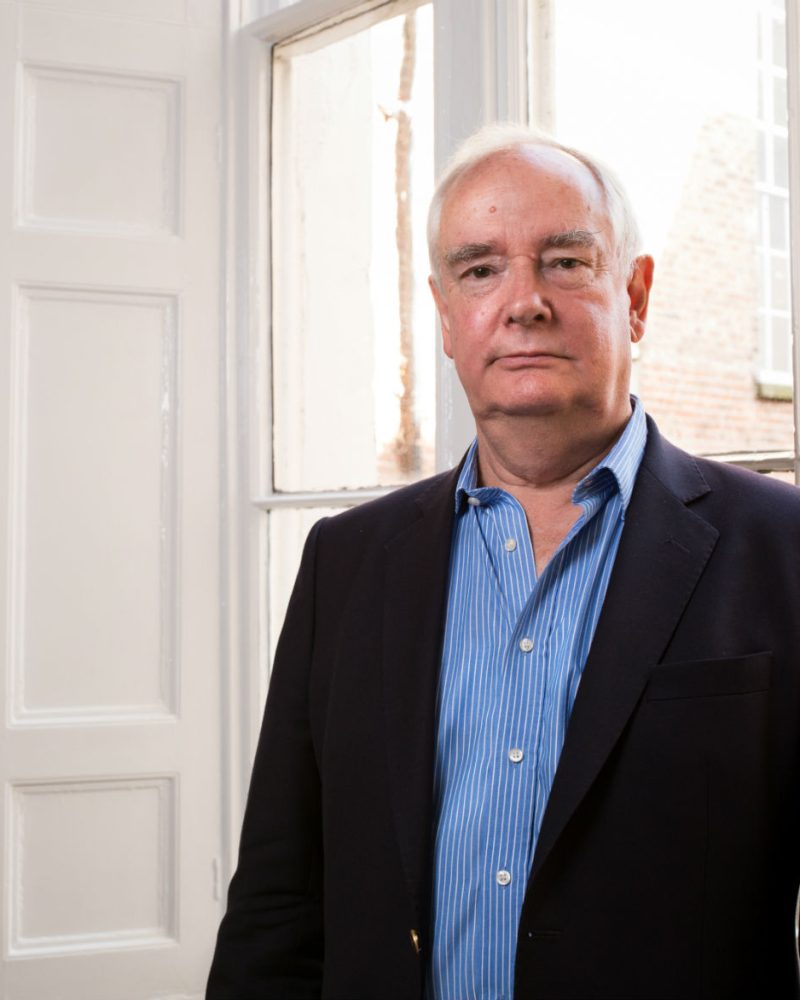
In this insightful interview, Patrick Collister shares his extensive experience in advertising, digital content, and creativity. Discover how digital has transformed marketing, the importance of creativity in brand building, and practical strategies to foster innovative thinking.
Chapters
00:00 The Journey from Copywriting to Digital Content
04:01 The Evolution of Advertising and the Impact of AI
11:13 The Dilemma of ROI in Marketing
14:02 Balancing Short-term Goals with Long-term Brand Equity
14:19 The Role of Creativity in Business Success
15:45 The Need for Better Marketing Education
16:24 The Future of Marketing and Creativity
18:34 Creativity vs. Conformity in Marketing
19:52 Nurturing Creativity in Teams
Resources
How to Use Innovation and Creativity in the Workplace
LinkedIn
Website
If you’ve ever shipped 20 assets in a week and still felt invisible, you’re not alone. Most marketers are stuck in channel chaos. I bet you’ve wondered why campaigns that should work just don’t. Well, this conversation will save you months of guessing because the problem isn’t your team or your budget. The things we’re told to chase like metrics are often the biggest distraction from doing work that performs.
And the least reliable signal when you’re trying to build brand awareness. I’m not here to give you tactics on how to squeeze the most efficiency out of your funnel. In this episode, you’ll walk away knowing how to think like a creative director. Today, I’m talking to Patrick Collister. He helped build Google’s creative think tank, Zoo.
And has watched ideas reshape entire brands, even in the worst conditions.
I’m Patrick Collister. I belong to a tribe called the “When I…” Because I’m semi-retired, it means when I was a creative director at Ogilvy, when I was doing this, that and the other. And when I was at Google, for example, and that’s my background. I was an advertising copywriter. I became a creative director. I ended up doing seven fun-filled years at Google, heading up the Zoo, which is Google’s creative think tank.
In Northern Europe, which was fun. It was a laugh.
Patrick’s career isn’t just a list of “when I” moments. It’s a pattern of landing right where the industry is about to shift. And one of the first big jumps happened in the nineties when digital was still the future. So let’s go back to the moment he built Ogilvy’s first digital creative unit.
I’d love to hear about that transition from copywriting into digital content. How did you find that transition?
Well, that’s really interesting. I mean, this would be back in the 90s. I was the creative director of an ad agency called Ogilvy and Mather. And I got a phone call from the marketing director of the Daily Telegraph. And we met for lunch and he said, look, I don’t know anything about this digital business except it’s going to completely change everything.
He said, I have no idea how we’re going to make money out of advertising in the digital space. So why don’t we take a look at it together?
So as a result of that, I created a digital unit inside the agency, which was fascinating. Because these were really early days. So my guys created the first ever branded screensaver and we created the first ever digital interactive ad that was also for Guinness.
But honestly, the leaps and bounds within just a few years have been astonishing to look back to. So again, it’s one of those things. I mean, you can’t read… you know when you grow, you aren’t aware of the fact that you’re growing millimeters every day, you just end up taller.
And it’s the same with the digital revolution. It just crept over us and bang, suddenly the world was completely different.
The only thing I would say is that in advertising we talked about the digital revolution a lot, but it’s actually only in the last couple of years that it has really, really turned advertising upside down. And that of course is because of AI as much as anything.
But it’s also the way advertising is delivered through programmatic. So yeah, we live in interesting times.
Like me, you might assume that Patrick was always at the edge of change, but it turns out those jumps weren’t the strategic master plan. They came from something far more familiar to most of us, an event that can be destabilising and lead to uncertainty.
The Guardian, which was nice, but not for any particular reason. They were sponsoring something anyway. The journalist said to me, you know, Patrick, look at your career. You’ve been rather amazing. You were in advertising and then moved into direct marketing just as direct marketing was getting big. And then you moved into digital at Google.
How were you one step ahead of the game?
And I said, it’s because I got fired each time. I got sacked for being a pain in the ass.
And then when you haven’t got a job, what you do is you look at what’s in front of you.
So in many ways the worst thing that could have happened to me is not being sacked from Ogilvy because then I wouldn’t have discovered direct marketing and I wouldn’t have discovered how exciting digital is and continues to be.
So I kept getting sacked. And the thing is that you have to put your head on the chopping block.
Why did you get sacked from Ogilvy? Which campaign was that?
It wasn’t a campaign that got me. I was the vice chairman and I got a new chairman and we regarded each other over a chasm of misunderstanding.
He couldn’t understand why I spent so much of my time talking to clients. And I was talking to clients about their business and about the importance of creativity and sustaining and actually improving their business figures.
He thought my job was to just crack the whip over a fairly large creative department.
And I didn’t. My job was to allow my creative people to do the best they could and to let them free, not to contain them.
It is an interesting thing, all of that. My big boss at the time was Martin Sorrell.
Okay.
And I remember having a conversation with him once about creativity.
I said to him, the thing is Martin, when you walk around an agency, the creative department, you want to see everyone with their heads down.
Imagining, staring into space and imagining.
I want people thinking.
I even tried banning art directors from having computers because when you’re an art director you can just spend hours fiddling and it looks as if you’re working, you’re not, you’re just messing around.
I wanted people to think. I wanted people to be able to have the ideas that would then solve the problem.
What type of manager were you or are you?
I tried very hard to…
There are certain kinds of creative directors out there who make all the decisions. You’d be shown work and you’d say yes or no to it. And I handed over responsibility for that to the creative people themselves.
And that was in many ways terrifying for them.
Because it actually is really a nice feeling that somebody else has made the decision. And suddenly they now had to judge their work themselves. Is it good enough?
So what that meant is they became much more collaborative with the account teams because they’d say, well, we have this idea, we don’t know if it’s any good.
And then the account teams would go, God that’s great, but if you did that and the other.
So what happened is the work got better because there wasn’t this pyramid of creative directors to squash it. It became collaborative in the teams themselves.
And I learned a real lesson in management from an incredible woman called Shelly Lazarus and she ran Ogilvy worldwide.
What she did was she asked questions.
When I was early on as a creative director I thought my job was to go into a room and make the decisions. So I’d go in there with testosterone seeping out of every pore and then I’d walk out of the room.
And no doubt behind me people were going, what a wanker.
Whereas Shelley would ask questions and she’d lead the discussion and people would talk about it.
And then at the end of the meeting everyone would walk out feeling that they’d been part of a decision, part of something.
And I thought, my God, that’s how you do it. And it’s called emotional intelligence.
And I have to say most men have got very little of it.
It’s a skill. It’s a skill.
Including me. It is. But it’s a skill that honestly should be developed.
Patrick helped shape the early digital landscape, but digital didn’t just give us new toys. It completely rewired how ideas had to work.
And that’s where things start to get a little bit messy.
I wanted to understand why marketing feels so chaotic for us today, even when information is a click away and we have access to tens of productivity tools to help us manage.
In the old days I’d get given a creative brief and a big idea was an idea that you could use across television, posters, print and radio.
Now today there are so many different channels. Not just social, not just display advertising, but now we’ve got brand engagement, activation, sponsorship.
Sponsorship is huge now.
And suddenly you’ve got to have creative ideas that cover all of those things.
In addition to which, as a result of probably the financial crash in 2009, we’ve got marketers increasingly obsessed with the immediacy of ROI rather than long-term brand building.
And this is one of the biggest dilemmas and debates in the industry at the moment.
Is it performance versus brand? Or how do you make the two sit alongside each other?
So the shift from one big idea to small tactical assets explains why everything feels so scattered.
We’re drowning in formats and chasing metrics that don’t mean much to our human prospects.
So if optimisation isn’t the answer, what is?
Repetition in advertising just goes over people’s heads.
You don’t notice an ad that’s repeated at you because you never wanted to see it in the first place.
You’re not going to engage with it.
It’s a big shock for a lot of marketers to learn that actually no one gives a s**t.
They really don’t.
The Economist reckons that we’re subjected to around 3,000 selling messages a day. Google research reckoned it was over 13,000 a day.
Now if I was to ask you if you could remember a single selling message from yesterday, you might possibly remember one.
And that is a testament to the fact that we think advertising is bad.
And we do everything we can to block it out.
Because we’ve got busy lives and other things to think about.
So when I was a creative director we used to talk about big ideas.
A big idea was a thought that could be executed countless times across countless channels.
The world’s biggest brand is Apple.
If you look at Apple’s advertising, they’re putting films and content out there in which you see characters and people.
You can follow these people. They have identifiable characteristics. They have problems.
And in all of the TV commercials and video content they make, the product is central to what’s going on.
Shot on an iPhone is a big idea that has now lasted for 10 years.
Ten years ago it was about amazing photographs you could take, but now it’s about the movies you can make.
So Shot on an iPhone works.
They’ve got some fantastic films in China shot on an iPhone.
Many marketing teams don’t know how to make their content cohesive.
That’s why we’ve built the Content Power Score.
It shows you where your systems fall down so that you can stop pushing siloed content and start offering a consistent message.
The link is in the description.
A lot of marketers are no longer investing in big ideas.
They’re investing in lots and lots of small ideas.
What they want to do is get messaging down to the bottom of the funnel as quickly as possible.
Mm-hmm.
In the digital space, because digital advertising is relatively cheap, marketers can just pay and spray.
That’s what people do.
I bought a pair of Crocs once.
And no sooner had I bought a pair of Crocs, not even from Crocs’ own website but from another retailer, that same retailer started following me around the internet with banner ads offering me the same pair of Crocs for less.
I’d already bought them.
The point is there is enough of my data out there for the advertiser and agency to know I’ve already bought them and they should leave me alone.
When I was at Google I was absolutely gobsmacked that most advertising can be personalised.
The data exists.
But only 7% of advertisers personalise digital advertising.
That means 93% of digital advertising is completely untargeted.
AI now has the ability for a couple of assets to be turned into hundreds or thousands of ads.
I was the non-executive creative director of a company called AdLib founded by Olly Marlowe Thomas.
He and his tech director Ed started using AI to take assets and create digital advertising automatically.
This saved unbelievable amounts of time in studios.
There were 13 different banner ad sizes that could go on websites.
Creating them manually was expensive.
But with AI it could be done in seconds.
Four years later they sold the company for 100 million.
But the assets were still being dispersed senselessly across the internet.
One brand gave me a press ad with about 60 words of copy and asked us to turn it into digital display.
But if you look at your mobile phone banner ads, how are you going to read 60 words there?
I do find from my learnings at Apple that marketers often don’t put themselves in the shoes of the consumer.
You might see ads with 60 words.
Five words maximum is usually enough.
That would be so true.
Coca-Cola tastes nice.
Now how can I turn that into something engaging and different?
What’s really striking is that we have all these tools and information, yet the output is still lazy and repetitive.
This isn’t a tools problem.
It’s a creative problem.
Christine, what is creativity?
You tell me.
For me creativity is observing the world.
Nothing is really new.
But you rearrange things in ways that are novel.
You’re taking notes from life, conversations, and observations and combining them into something inspiring.
I quite like that.
But I would go broader.
Creativity is nothing more and nothing less than solving a problem.
For example, Lucozade.
When I was growing up it came in pint-sized bottles wrapped in orange cellophane and you gave it to kids recovering from colds.
But later, better housing and heating meant fewer kids got sick.
So sales dropped.
A smart marketer looked at the idea of recovery and thought, what else can Lucozade help you recover from?
Exertion.
And suddenly it became an isotonic sports drink.
So creativity is solving a problem by shifting perspective.
Another example is the famous Cadbury Gorilla campaign.
Cadbury was in deep trouble because of a Salmonella rumor.
The CEO had made a terrible comment in a press conference and headlines everywhere said Salmonella in Cadbury chocolate.
Sales collapsed.
The marketing director Phil Rumbold briefed creative agencies to help solve the problem.
An agency called Fallon created the Gorilla ad.
It got over 150 million views.
It wasn’t meant to sell chocolate.
It was meant to make people forget the scandal.
And it worked.
The Gorilla campaign shows how creativity can rewrite a brand’s image.
Big ideas don’t always come from big budgets.
They come from individuals who see the world differently.
Patrick even wrote about this in his book How to Use Innovation and Creativity in the Workplace.
Creativity is a human ability.
Every single person has it.
But it requires work.
The amazing thing about useless knowledge is that one day you’ll combine two random things and have an idea you couldn’t have had otherwise.
You’re filling a repository of knowledge you can draw from when solving problems.
Harvard Business School found that 81% of CEOs say creativity is the most valuable asset they look for in executives.
Creativity is about having ideas and testing them.
Marketers who are good at it often become CEOs because marketing requires judgment and understanding customers.
That’s really interesting.
For example, when Kraft merged with Heinz, the CEO reduced the advertising budget drastically.
By 2019 the company lost $15 billion in value.
The CEO was replaced by a former marketer who reinvested in creative advertising.
And it turned Heinz around.
Another example is Lou Gerstner at IBM.
Wall Street wanted him to break up the company.
But he believed in encouraging creative thinkers inside the organization.
He called them wild ducks.
People with unusual ideas.
He empowered them and IBM transformed into the world’s biggest consultancy.
Thank you so much, Patrick. It’s been lovely speaking with you.
Time to review our notes.
The industry’s obsession with short-term ROI has pushed teams into a corner.
More channels, more pressure.
But none of that matters if people don’t care.
People only care when the work has a big human idea at the center.
Creativity isn’t magic.
It’s problem solving.
It’s paying attention.
It’s collecting useless bits of knowledge until two connect and create something new.
The best leaders ask better questions.
They create space for ideas.
They let their teams think.
So as you head into your week, focus on the problem behind the brief, not the deliverables.
Notice what’s interesting.
Ask better questions.
Thanks for listening.
If you want to see where your content system is breaking down, check out the Content Power Score in the description.
I’m Christina Moore.
You’re listening to A Mind For Marketing.
Explore other episodes from our podcast series to stay updated.
Gain fresh insights and inspiration with every new conversation.