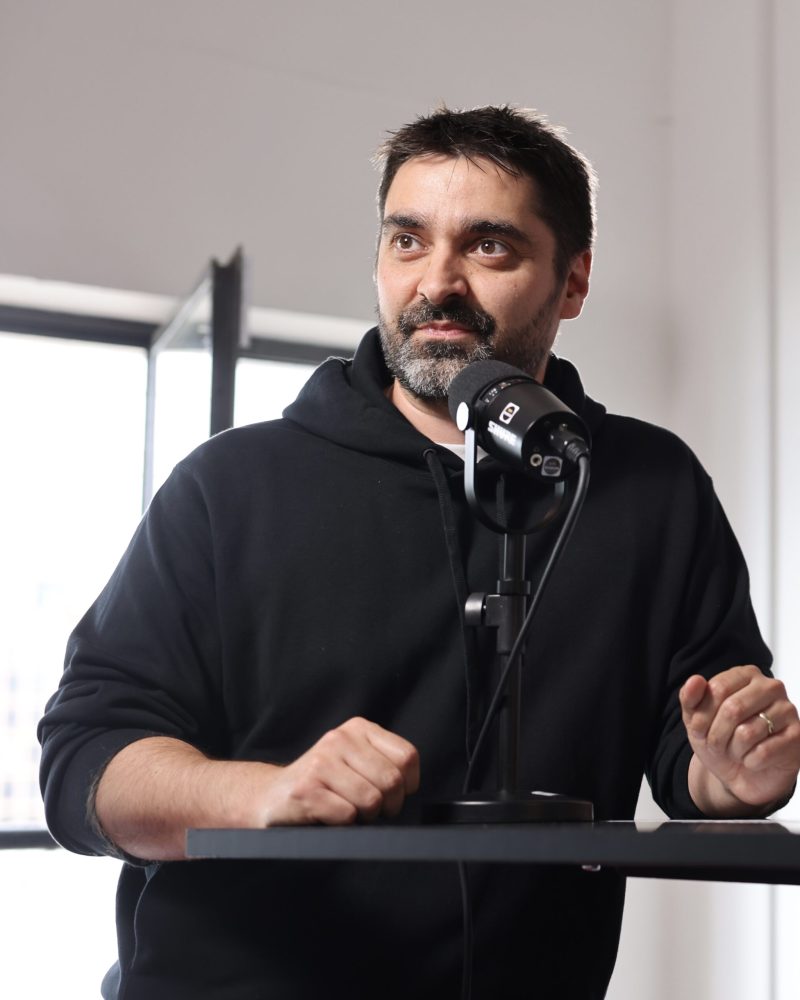

Aysha Haynes, co-CEO of Flock Associates, explores how marketing teams success hinges on leadership, decision-making, and environment rather than just talent or agency strength. Discover how transforming these foundational elements can boost performance, creativity, and agility in marketing teams.
Key Topics:
Chapters
00:00 The real barrier to marketing success: decision-making, not talent
00:29 Why organisations focus on agencies instead of systemic decisions
01:41 The environment’s role in consistent marketing performance
03:03 How decision-making influences brand results and team behaviour
04:12 A practical framework for improving decision clarity, communication, and flow
06:23 How organisational systems influence individual performance and motivation
08:19 The Content Power Score and its role in assessing content readiness
09:01 The invisible factors impacting team performance: autonomy and accountability
11:16 Changes in performance when the environment improves
12:45 Moving from reactive to intentional work through pauses and reflections
16:22 Future challenges and opportunities with AI in marketing
19:13 The core leadership mindsets to navigate complexity: optimism, clarity, positive energy
22:37 Closing thoughts and resources
Resources & Links:
Christina Moore (00:00)
Most marketing teams don’t have a talent problem. They have a decision-making problem. You can have strong agencies, good people, decent budgets, and still get inconsistent results. So if the input is right, what’s breaking the performance? Today’s conversation is with Aysha Haynes, co-CEO of Flock Associates, and she’s floating the idea that marketing performance is a leadership and decision-making problem, not a capacity problem.
Most organisations assume the opposite. They look outward, better agencies, better ideas, better execution. But what if the issue sits upstream in how decisions are made, who makes them, and how workflow flows through the system?
Aysha Haynes (00:54)
My name is Aysha Haynes and I’m the co-CEO at Flock Associates.
So Flock ⁓ supports big brands with marketing transformation.
So that is taking on board and taking a holistic view at the areas that they are potentially struggling with and having challenges, but also opportunities for growth.
And as a co-CEO, I’m mainly responsible for delivering, defining and executing our business strategy. And that goes into a few different areas.
And it is most importantly, taking care of our people and our culture, making sure that they feel motivated, that they are growing and that they’re in a position to provide the best service to our clients.
Christina Moore (01:41)
many teams feel like they have strong people and good agencies behind them, but they still kind of get inconsistent results. What do you think is harming that performance?
Aysha Haynes (01:53)
think it’s the environment that sits around that. you know, all too often when we define processes and systems, it’s the technology, it’s the workflow, and then you have the capability of the individual. What I’m talking about, the environment around it is more around how do you make decisions? What is your speed of decisions? You know, how do you define individual job descriptions?
And all too often you have a lot of overlap which causes confusion. You have competitiveness because there isn’t clarity. You have the wrong people making decisions at the wrong level.
And that is why regardless of having the right agencies, the right people, you’ll never be able to maximise. And you can, it can either be a contributing factor to brands not performing, or it could be a contributing factor to brands not maximising the potential. And that’s the cream on top, right?
AI is coming in, and so the uniqueness of different perspectives and different talents, a leader needs to go that step further to uncover that and make sure the environment is right to feed that so that they can use that for their business decisions and growth.
Christina Moore (03:03)
So if the environment and the decision making are the issue, it means that a lot of teams are actually solving the wrong problem. Why do you think that a lot of brands will default to, well, we need better agencies, we need better ideas. Why do you think that happened?
Aysha Haynes (03:21)
I think that’s because that, you know, in under itself, the speed to make decisions and the demand, you know, marketing teams are under a lot of pressure to move very quickly. It’s a very reactive environment. And so when you, when you feel the impact of something go wrong, that can be massive. They’ve got very big exposure. You know, they’re open to a lot of critique from departments within the brand,
And so their default is to go for the most obvious because to be able to pick up the bonnet and look underneath it and say, hold on a minute, actually our capability is right. Our agency is right, but it’s how it connects with how we make decisions. What’s that process flow? Who do we have talking to who and are there any overlaps?
I think all too often, because of the time pressure, it’s almost the default kind of go-to at the moment.
Christina Moore (04:12)
So if this is happening in organisations, there must be some sort of pattern to how it breaks down. Do you have some sort of like clear framework for delivering that system?
Aysha Haynes (04:25)
Yeah, so this is my personal framework that I use as I go into organisations to assess how they’re working. And the first element, is about clarity slash communication. So what does good actually mean? How do we communicate? What are the different methods? How is what’s said received? Who owns the outcome of what’s being communicated?
The second element is around the quality of our decisions and the way that we make decisions. Are the right people making the decisions? Are we making fast decisions? Are they informed?
What’s the structure around some of the more complex decisions? Because you want decisions to speed up progress, not to hinder them. At the same time, you want people to feel empowered and you want clarity, going back to the first point, in who’s making what. And both of those elements then come to the third element, which is about flow. So how easy does work move through?
⁓ the system. Where do we slow down? Where do things get stuck? where there isn’t clarity or where someone doesn’t know whether it’s their job to do, whether they’re waiting on somebody else, whether it is their job but someone hasn’t said it and so they’re not going to move. So all of those things can slow down a project.
can slow down a deliverable. So really looking at how those things are flowing. Now if any one of those elements break down or if they’re not working the best that they could, that has a direct impact on the performance dropping. But if you can work to tighten those elements, then you’re really going to see how your performance can and your people feel flourished. So it’s the difference between a chaotic environment
versus a more intentional and smooth environment which you want in place when you’re working at speed.
Christina Moore (06:30)
Up to this point, we’re talking about systems, but systems don’t fail in isolation. They show up in behavior, in how people speak up or stay silent, in how they make decisions or don’t. So what does this actually look like inside a team? How does that show up in an individual’s day to day?
Aysha Haynes (06:51)
when I really look and understand individuals, there’s so much that impacts their ability to be at their true, really show what they’re capable of, right?
I’ve seen individuals who have just sat in the corner, not said anything, just literally executed. And, you know, when we come to reviewing their performance, like this individual isn’t capable of, of progressing. They don’t have it in them, but through a few conversations, some coaching, going a little bit deeper and just understanding there’s so many things that that individual was interacting with along the way that was just demotivating them and not.
And I’ve been there, right? In my younger days, you rock up to work and in a meeting, if you’re shut down, if you know that you can make the decision and you have an opinion, but someone else is doing it, what’s your point? Why are you going to step in? So much of that happens, which is why when we look at reviewing performance, when we look at understanding roles and responsibilities, when we look at decision-makings, you know, it’s…
It’s one thing to kind of hold things for a leader, but to delegate it, to empower your team with decision-making, to trust them, to give them the environment to make decisions and fail and learn from those failings, to give them the space to be creative. All of that combined is really exciting to see individuals flourish in their role.
Christina Moore (08:19)
If you’re listening to this and recognising some of these patterns, you’ll often see the impact in the content your team produces. When decision-making is messy, the lack of clarity shows up in what you publish. That’s exactly why we created the Content Power Score. It looks at how well your content is set up to perform. You’ll get a clear view of what’s working, what isn’t, and what to fix first. The link is in the description.
Christina Moore (08:47)
So you touched on communication and for me, communication is one of those invisible factors that has a massive impact on organisations, on teams.
Can you think of any other invisible factors that have a huge impact on a team’s performance?
Aysha Haynes (09:09)
Yes, absolutely.
the level of autonomy that an individual has on a day by day basis. an individual only really has their job description to go to, right? And that’s so vague and high level and very theoretical when it comes to practice, you know, if it’s not clear to somebody, what opportunities do I have to make decisions? You know, what, when I’m receiving a brief, is this,
for me to be exploratory and come back with ideas or am I just told get on with it and execute? Where is that shift between making something my own and just executing on something that my leader has asked me to do? I think the other piece adding onto autonomy is accountability. It’s one of those scary words, but everyone wants to feel accountable for something. And so we should…
we should own that account, but make that accountability clear. ⁓ Sometimes, and I’ve been guilty of this, holding accountability as a leader. If I’m in environments that are particularly complex, I will hold more accountability closer to my chest. And that has a direct impact on the people that I support and the people that report to me because…
it has a knock on impact to how empowered they feel and how motivated they feel to do work. So I think making that clear and that shift and in scenarios where, you know, they’re not making the decisions or the accountability sits outside of them, explaining that,
So it rarely is to do with the individual. And I think it gets so miscommunicated that a lot of people leave work, you know, gathering up all of those. And that’s what leads to, you know, having bad experiences that then has a knock on impact to whether somebody is going to be their true self the next time around.
So really being able to get underneath that prevents all of that and that explanation is important.
Christina Moore (11:16)
So if those things are getting in the way, when you fix them, what changes?
Aysha Haynes (11:21)
I think you’ve got your basic one, is your retention, your team feeling good and strong. then if they are doing better at their jobs, then you’ve got quicker ROI to the objectives that you’ve set out. You’ve got more creative thinking. so that gives you a stronger position in your USP and where your differentiator.
You’ve got a good culture and ability to respond to unforeseen circumstances or a shift in market demands. And that’s always good because again, compared to 15, 20 years ago, know, someone could be in the same job for a number of years. Now, I feel like our jobs are changing like every couple of months. So you need that level of agility and what underpins.
an agile person is their ability to be motivated and to be open and to have that commitment against the job that they’re doing and the brand that they’re working for. So once they have that, then your ability to work with them and lead them as a team becomes much easier. And therefore you can focus on supporting them and allowing them to do what they’re good at whilst making sure that you stay on target to deliver your strategic objectives.
Christina Moore (12:45)
What Aysha’s describing sounds like teams stuck in reactive mode, responding quickly, but not always intentionally. So there needs to be a shift in behavior as well as operations. How do teams move from reactive to intentional?
Aysha Haynes (13:01)
You stop being reactionary by creating the, which is not easy. You need to embed the space and the time in different pockets of the process. So if you look at it on our day-to-day project level, you you need to make sure that on a regular weekly daily, you’ve got time to pause, right? Pausing is what supports the brain to move from reactive. If you’re all, if you think about,
you know, like a hamster wheel just always going, going, going. Every problem that appears, we’re just gonna think of the last time we resolved the problem and we just went, right, that’s the best way to do it. And there are different ways in which we draw on new ideas, new ways to solve problems and creativity. But just as an example, you know, personally, I have my most random ideas either early hours of the morning or when I’m on holiday in a nice, you know, environment.
where there’s either a beach or there’s trees and there’s grass and I’m just in the open and I’m pausing and I honestly some ideas I come up with I feel like I can fix the world. But when I’m at work and I’m you know going from email and meeting to meeting to meeting and somebody comes at me with something I’m just going to think of you know the quickest way that I could get that solved. So the way to really embed that is to create those spaces.
Now, depending on the size of your team and the pace that they run, that needs to be aligned to that. So at Flock, we have quarterly check-ins and then once a year, we have a good downtime. And we are taking the individuals through, really bringing their state of mind into where they can be most creative. And we’ve done different things. We’ve done yoga.
We do ⁓ meditation, we do, you know, retreats where we go off into the countryside. You know, we really focus on bringing the brain right down, bringing the mindset right down so that they can be creative and they can see the value in that. And we teach them techniques to be able to do that themselves. So, you know, the more self aware you become, the more you can realise when you’re becoming, you know, really tight, really stressed when you’re, when you’re feeling a bit off.
And it allows you to be like, right, I need to have that time to pause. And my manager or my leader is supporting me with that pause so that I can come back with decisions, I can come back with that work. it needs to be, that’s why it needs to be part of the environment, because it needs to be an accepted way to behave, but it doesn’t want to hinder the speed of how we move forward. So there is striking that balance.
You don’t want someone to take a whole week to be thinking about it. You want someone to come back within a suitable time frame. So all of that needs to be tailored to the situation, the type of work, the overall environment, but allocating it could be 15 minutes every morning. It could be once a week, once a month. But the more you can create that space, the more you move from reactive to intentional.
Christina Moore (16:22)
So looking ahead now, about the impact AI will be having on marketing teams. What problems do you foresee in the future?
Aysha Haynes (16:35)
mean, AI is moving so fast and it is exciting. I, you know, in my conversations with people and leaders, you know, we’re very quick to implement AI and maximize, you know, automation, make things quicker. I think it, you know, a lot of people are really feeling the fear because they are not in an environment which supports their, you know, well, what happens to me?
Right? What, how am I evolving is number one. And number two, a level of reassurance about their area of specialism and AI will, will, will come and do some great, fantastic things for all of us. But the reality is that there are still, there’s still some very unique specialisms that only humans can contribute. And we need to.
highlight that more, need to celebrate that more, we need to focus on that alongside the evolution of AI within organisations. And it’s not a case of the positioning of, know, AI is coming and this will change your job, therefore we need to look at it. It needs to be alongside it. It needs to be, you know, these are the unique things that only you or the team can bring forward. How do we maximize this? How do we then…
allow more space, I call it play in the garden, you how do we allow more space to evolve and go into depths over here and allow some of the things that, you know, is best suited for AI to kind of come in and drive so that it’s working hand in hand to scale, be at their best, you know, and deliver quality. But it, you know, the human aspect of it needs to be considered alongside and not as a
not as an afterthought, which I don’t think always, but at times in certain companies, it has been considered as that because everyone is feeling the pressure to implement the AI technology very quickly.
What we cannot forget or we cannot lose sight on is how people are feeling about their progression in the age of AI. And we need to remind ourselves and each other of the unique specialisms and skills that we bring to the table, that only us as individuals can bring to the table and that uniqueness. And that is what I want to make sure.
is promoted, celebrated and reassured.
Christina Moore (19:13)
So if we zoom out, the pattern is clear. When marketing underperforms, it’s rarely because people aren’t capable. It’s because decision-making is unclear, ownership is blurred, and the system slows everything down. Fix that and performance follows. Not through more effort, but through better conditions. So the real question for leaders isn’t how do we get better marketing? It’s how do we build an environment where good marketing can happen?
And that brings me to my final question. I asked Aysha to think back over her career. What are the three mindsets that have helped her lead through complexity?
Aysha Haynes (19:54)
The first mindset is…
to be optimistic and open to learning.
always, always want to learn, even as a leader. And I, you know, I celebrate my leadership style. I, you know, look at people as humans and therefore I know that I need to learn as well. And I think sometimes as a leader, you’re expected to know everything and, you know, be right and perfect and everything. And so to be optimistic, but open to always learning is a great way to be.
My second mindset is to seek clarity. you know, I always, and I’ve built that confidence over time. I’ve never always had that. I’ve always drawn my own assumptions. But in, you know, in the second part of my career, you know, my ability to just ask questions and get clarity. So where I have, you know, felt a certain way or I want an opportunity, I’ve just, I’ve asked, I’ve clarified. So we’re saying, you know, can I do this or not?
And I think that really helps. And my third mindset is a combination of, know, I flourish when I am around the right energy and similar, a similar vibration to myself. And that has really allowed my creativity to blossom.
And I didn’t realise it because so much of my earlier career was with people where I almost had a negative impact on the energy that was around me. And so I didn’t really see the full potential in myself. But once I’d shifted, I was like, wow, right? You’re really leaving conversation. So the other mindset shift or the mindset focus is making sure that I’m always surrounding myself with the right.
energetic vibration and I allocate the time for me myself as a leader to have the space for creative thinking. And it’s not just creative thinking, it’s just thinking outside of the box, right? Allowing random thoughts, ideas, different ways to solve problems, just allowing your brain to wonder so that anything can come through, whatever that is.
⁓ And since doing that, I’ve seen nothing but personal benefit, but also benefit to all the organisations that I work with.
Christina Moore (22:35)
Lovely. Thank you very much.
Christina Moore (22:37)
Thank you for listening. My name’s Christina Moore. This is a Mind for Marketing. And if you’re curious where your own content strategy needs to transform, take the Content Power Score. The link is in the description.
Explore other episodes from our podcast series to stay updated.
Gain fresh insights and inspiration with every new conversation.