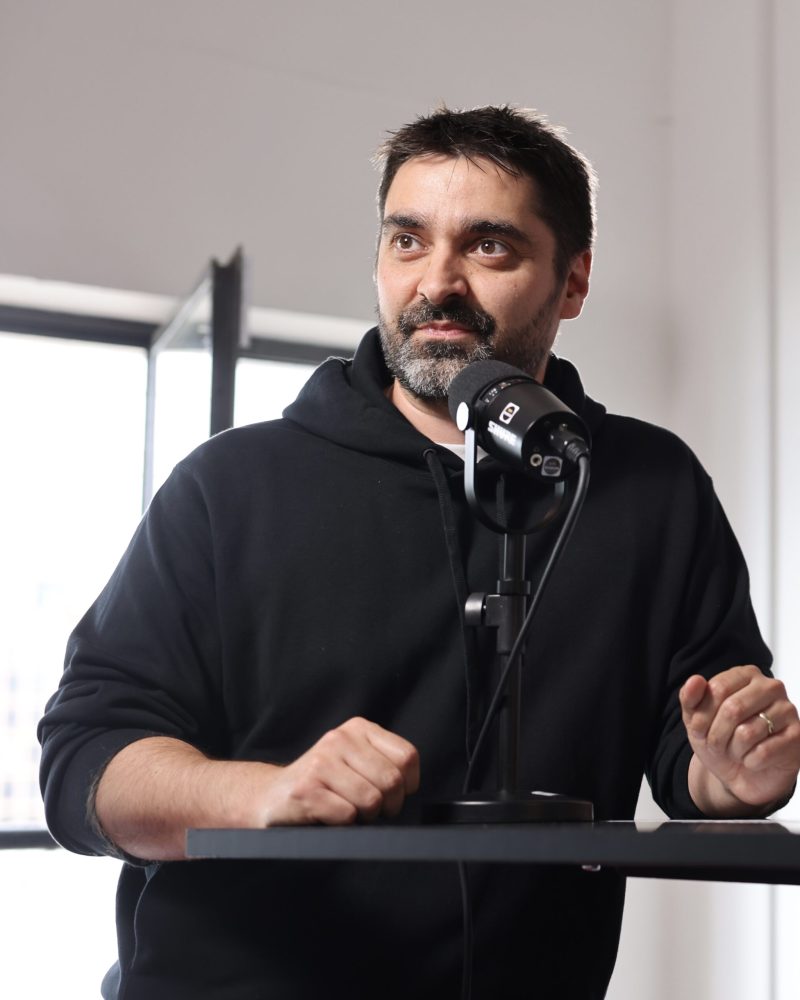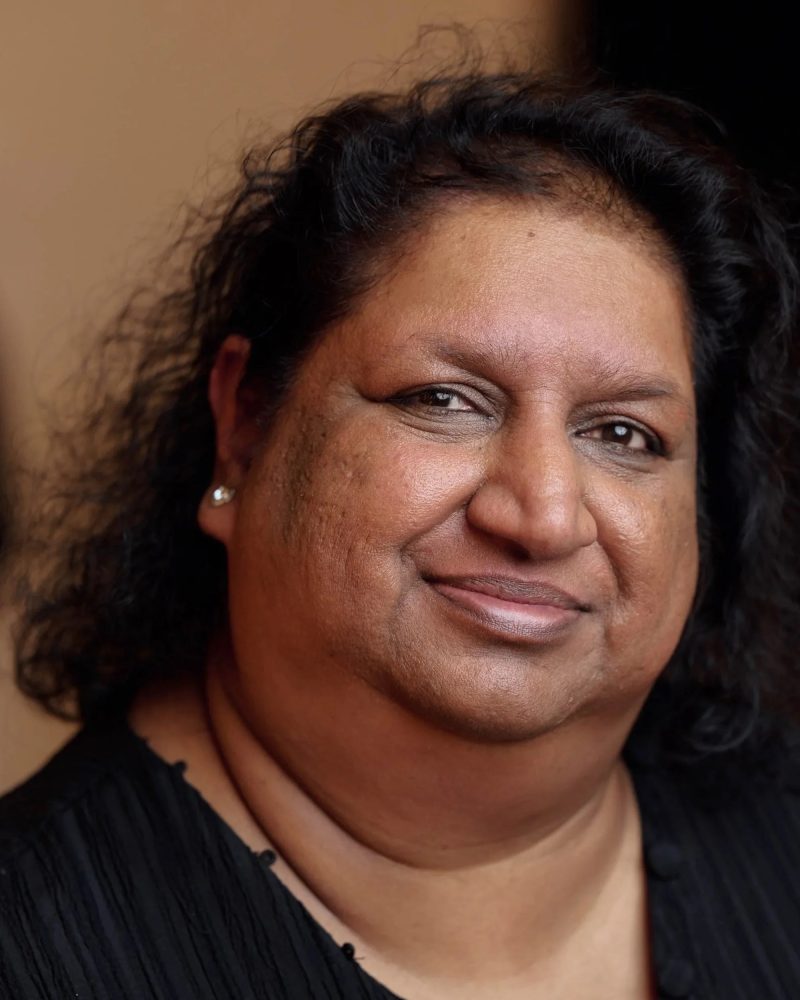
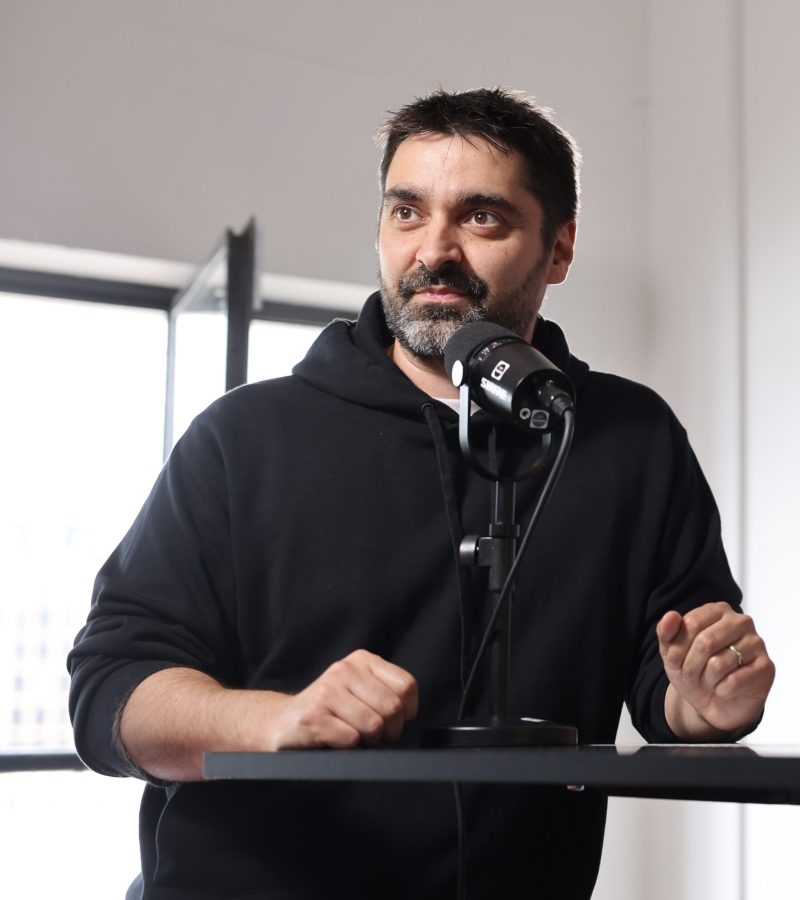
Richie Mehta, co-author of Climb and founder of the School of Marketing, Trusted Marketing Leader, explores how marketers can create and sustain influence throughout their careers. The conversation dives into the importance of intentionality, influence tactics, and navigating organisational dynamics to thrive at every level.
Key insights include:
Chapters
00:00 The shift from doing to influencing — understanding impact at senior levels
01:06 Richie’s background: from HSBC to founding the School of Marketing
02:50 The risks of progressing on momentum vs. intentional planning
03:32 The importance of designing a flexible career path for influence and fulfilment
04:46 Warren Buffett’s slot card analogy and making intentional career moves
05:42 The ladder of influence — climbing higher means fewer seats and greater loneliness
07:16 The challenge of imposter syndrome at the executive level and mindsets to overcome it
10:47 Cultivating champions by being influential and creating trust
12:23 How capable marketers often stall — the importance of influence and trust-building
13:09 The victim mentality versus a player mindset for influence
14:07 Establishing trusted authority through delivery and credibility
15:06 Small, safe experiments (‘micro bets’) as a way to gain traction and influence
22:28 Archetypes of career success: Climbers, Explorers, Creators
24:34 How different career archetypes define fulfilment and influence
28:24 Building external visibility: Networking, digital presence, podcasts, and social influence
33:43 The mindset for future success: embracing ambiguity and technological change
35:50 Final thoughts: Influence as a continuous journey, driven by evidence, trust, and consistency
Resources & Links:
Christina Moore (00:00)
At some point in your career, you stop being judged on what you do and start being judged on what gets done because of you. And that switch to becoming someone influential can be so hard to navigate. Most marketers don’t choose their career deliberately. They progress on momentum rather than being intentional. At a junior level, that works. But as seniors, that’s really risky. Experience and influence
are not the same thing. You can be highly experienced, but not actually influential. And if that happens, your decisions don’t shape the business and that can bring your career to a screaming halt. Today, I’m speaking to Richie Mehta, author of CLIMB and founder of School of Marketing, whose research spans over 20 high-performing leaders, from CMOs and CEOs to Olympians and entrepreneurs. We’re exploring how you can create influence
and help your career stay on track.
Ritchie Mehta (01:06)
Well, thank you, Christina, for having me on. It’s an absolute pleasure to be here. started my journey in India, interestingly. I’m half Indian, half Scottish. And as a young teenage boy, I left the subcontinent to come to the UK, where I landed up in rural Scotland, a place called Ecclfecan, where I came back with my mom and brother
I started my career at HSBC on the grad program. which was fantastic as an experience, that whole grassroots understanding of how to sell and how to, you know, create customer experiences, which are compelling, really set me up for a wonderful career in marketing where I spent about 10 years.
working in a variety of different marketing based roles, all the way from brand management to customer management to CRM and loyalty. And then I had to step off at another periphery moment where I decided that I wanted to be independent. I wanted to become an entrepreneur.
But what I really want to do is be at the intersection of helping young people get into our industry to help them thrive when they’re here. And it was with that that I became a marketing lecturer. I then ended up founding a number of businesses. One of them was an organisation called School of Marketing,
And that sort of takes me to the culmination of where I am today, me being an author, which is a wonderful journey, I recommend it to anybody But it’s very much a culmination of six years worth of research where we interviewed over 200 people, really world-class individuals, all the way from chief marketing officers, CEOs, Olympians, actors, even comedians.
in order to try and answer one simple question, which was how do you create success and fulfillment in today’s career? And so that’s where I am today.
Christina Moore (02:50)
Most marketers will be really familiar with that scenario that you just set out, Richie. They don’t choose their career deliberately. They fall into marketing having done or studied a number of different things. They progress on momentum as opposed to intent. That works really early on in their career, but as a senior level, it becomes a real risk, I think, because suddenly you’re expected to influence decisions.
within organisations and possibly even external partners. And a lot of frustration can come from that. What does the lack of intentionality actually cost at that level?
Ritchie Mehta (03:32)
Christina, first of all, I think your observations are really astute. And I think many senior marketers today are sitting in exactly those positions that you described. I think you’re absolutely right. So many people, in fact, the majority of marketers today at some point in their time would have probably been absolutely sure that they fell into the space that they’re in.
Not necessarily a bad thing, but when I think about all the wonderful leaders who have done extraordinary things, they all have led with intentionality, as you described. They all have had a level of a career plan, but then applied a degree of flexibility to get there. In fact, when I think about it, Vinod Gosala, who’s a massive US entrepreneur, talks about the need to design your career for flexibility.
And indeed in today’s environment and context, that’s probably a very wise strategy. I also think when I was reading and doing the research, there was a wonderful quote that came from Warren Buffett. And he often talks about the 20 slot card theory as it were. And we applied it to a career context. And he described it as all of us have a finite number of punches, a number of slot cards that we can play.
And every time we create or do make a career move, we are actually punching in one of those slot cards. And we don’t really understand the significance at that moment in time of how important that decision was. And perhaps as good old Steve Jobs says, you can only join the dots in hindsight. But the reality is, is if all of us acted with a bit more intention to be able to really understand how to…
and where to, and to think about each of those career moves in the context of, I getting closer to the North Star that I really want to get to, or indeed, is this taking me further away? I think we’ll all be better off. So leading with intention, I think, is absolutely true.
Christina Moore (05:29)
So each decision feels isolated at the time, but they’re actually shaping where you end up and what options are left open to you. And I imagine that becomes much more apparent the further up you go.
Ritchie Mehta (05:42)
It reminds me of a wonderful quote by a fantastic leadership guru called Chris Hurst. And he talks about, as we climb the ladder,
It’s like a game of musical chairs that every time we get a promotion, we go a little bit higher. We’re removing one of the chairs. And what does that do? Well, there’s two things. It makes it far more competitive to get up to the next rung, but also it makes it far more lonely because ultimately there’s only a few chairs that we are all trying to sit on. And so it’s really important that the chief marketing officers and CMOs recognise
and are building their skill sets, their capabilities, their ability to influence at all stages of their career. Because ultimately, as they are climbing higher, it’s those skills, capabilities, and ways that they can influence which are going to hold them incredibly good stead to one, grab one of the chairs, which are few and far between, and then thrive when they are in the chair. And they will have coping mechanisms because they’ll have a wealth of experience that have gone by in days gone by, which will allow them.
to be ⁓ in a good position when they are sitting in that top seat to be able to deal with the plethora of different challenges that they’re gonna come their way. So I think influencers and how they deal with it and how they actually rise and climb is incredibly important, which holds them in that great seat and that good stead to grab the seat and then to keep it when they’re there. But that’s all key learnings as they go up the ladder.
Christina Moore (07:16)
That idea of musical chairs is really interesting to me because as you move up, there are fewer seats, but the expectation to influence increases. So it’s not just about getting a seat, it’s about holding the seat. It reminds me a little bit of when I finally became chief content officer at Curio and then realised, my goodness, all by myself, where is everyone? Like panic starts to set in and it becomes really scary.
Ritchie Mehta (07:45)
you know, this is an interesting point because a lot of CMOs will say the same. We spoke to the wonderful Alessandra Bellini, who is the former chief customer officer of Tesco. And what she said was quite remarkable. She said that as she climbed the ladder, she felt more and more like she had a greater sense of imposter syndrome. And I went, wow, how can you do that? Why would that be the case? And it’s because she felt that she had to keep proving herself.
And she believed that the only person she had to prove things to were herself anyway. But yet she kept on kind of having that sense of imposter because she felt that she was giving herself more pressure each and every time she was climbing further off the ladder. And the way that she was able to dive through this, was able to get through this, was the thought that her tenacity and persistence was that key to her sort of mindset.
and her never giving up sort of mindset. The fact that I’m gonna succeed no matter what was what really held her in good stead to be able to overcome some of those imposter feelings that she had as she went through. And she’s had an incredible career. In fact, she’s just gotten OBE. So clearly done phenomenal things and went achieved phenomenal heights. But it’s just a great thought that actually all senior leaders and no matter where we are in our careers, have a sense of imposter syndrome. We all have a sense of insecurities.
We all are just human at the end of the day. And I think that’s really important to recognise, but actually there are definitely lots of coping mechanisms we can put in place in order to overcome them to achieve those extraordinary heights that we’ve seen.
Christina Moore (09:24)
If you’re listening to this and you’re recognizing some of these patterns, you’ll often see it show up in the content itself. When influence is weak, content becomes inconsistent, it loses direction, and it struggles to connect with the audience. That’s exactly why we created the Content Power Score. It looks at how well your content is set up to perform. You’ll get a clear view of what’s working, what isn’t, and what to fix first. The link is in the description.
Ritchie Mehta (09:53)
some of the things that I would say to that imposter syndrome, is that competence really helps you to overcome and achieve an enhanced level of confidence. So I always think about the analogy about riding a bike. It’s a very simple one. if you, you know, in your first going, you’re fairly fearful, you’re going to fall, you’re going to scrape your legs and your knees.
But over time you become quite the expert and then you become so confident that you can end up driving on the road and so on and so forth. And so in our careers and certainly in our workplaces, if we have a high degree of competence in the work that we do and expertise that we draw out, then we will actually very naturally overcome imposter syndrome because we are actually worth it. I think that’s really important. The other thing that I think is really quite critical for imposter syndrome in the workplace.
is to be able to be led by data and evidence. Because if you do have evidence to the work that you’re doing, the positive work that you’re doing, the impact that you are making, the commercial outcomes that you’re able to then drive through, then ultimately you’re going to be in a great place. You’re going to feel good about it. You’re going to feel that you’re on the top of the world because you’ve got things that can back you up. And talk about backup. The next thing that you can really do is to think about who are your champions.
Champions of people who smash the table when you’re not in the room and say, no, you must talk to that person. No, that person is right for this role, for this opportunity. And if you have people in your corner, people who back you up when things aren’t going always your way, then I think that will really build you a high level of confidence and help you overcome some of the biggest challenges in the workplace. So building up your champions.
⁓ are really important as well. So those are just some of the key elements that we’ve seen, which can be really helpful to people who are sitting in those senior shoes at the moment.
Christina Moore (11:57)
I think one of the ways that you can get champions for you on your side when you’re out of the room is by being influential. I think there are a lot of capable marketers out there, know, they’re very good tactically. They may even have the first two qualities, but that you speak of like being, like having your backup.
I think being influential to the point where you create champions is much harder to do. Where do you see like very capable marketers stalling in this area? Are there kind of things that people are doing that means that they fail in kind of being influential to the point of creating champions?
Ritchie Mehta (12:45)
It happens all the time. And I think you’ve got two options here. You can either adopt a victim mentality that, my God, what I’m saying is just not being recognised. It’s not being heard. It’s not being implemented. Or indeed you can think of yourself as a player. And this is a lovely framework that I heard from Ed Smith, who was a general manager at Amazon.
And you can grab it with both hands and say, well, look, I may have been dealt a bit of a rank card, but what can I do next? What is the next step here to be more influential, to be able to influence the current situation that I’m at? And by the way, that situation could end up being a business decision. It could end up being a career decision, right? Many, many multitudes of decisions that this situation may arise in. ⁓ I actually think…
when we talk about influence, particularly internally, it’s about trust. Because if you can get the trust of a core group of, you know, pure like-minded influential stakeholders around the organisation, where they trust in what you say, that they trust in what you can deliver, that you can, you have a track record of delivery and those delivery leads to
positive commercial outcomes, then all of a sudden you end up earning a bit of a reputation for yourself. And once you do earn that bit of reputation for being somebody who delivers, and delivery can be execution as well as the strategy, then I think you’ll find yourself in a sweet spot. So for me, internally, that whole notion of being a trusted pair of hands is critical to success.
The question can ultimately be, well, how do you own this trusted authority, sort of safe pair of hands reputation? And sometimes it’s a gift because you’re on the right seat, but the right time and the right context and things just work. And that’s a wonderful place to be in. And you love the work you do. And there’s a bit of a flow about it. And I’m sure you’ve been there Christina many times, but there’s also times when there’s friction in that situation.
and things are hard and the hurdles that you have to jump and the hoops you have to jump through an organisation to get things done are incredibly challenging. What do do then? Because that’s the tough spot. I think it’s about understanding what’s in your control. What you can truly do in the seat that you’re in and understand what you need.
others to be able to do as well. how, what, what’s in your control versus what you need to influence and other stakeholders around the organisation. But more so than that, when, you’ve understood what’s in your control, do things which are small, which are experimental. And I would say do a number of those things, place multiple bets in small self-contained ways. Because once you have initial traction on any one of those directions,
you will be in a much stronger position to then go forth and start implementing them in a wider way. So I think that breadth of activities is how you can overcome in safe, sort of small experimental ways to prove traction and then basically expand them out into a BAU environment. I think it’s critical. And the best part is in marketing, we are not short of experiments. We’re not short of multitudes of ways that we can operate and do things differently. ⁓
And that’s how I think you earn trust because if you prove something, you prove your case time and time again through these small flexible experiments and then start to scale up the ones that work, your reputation will proceed you.
Christina Moore (16:43)
That’s really interesting. do you have any examples of like small multiple bets that you would play? So I think people would be fascinated to know what that looks like in practice. Yeah.
Ritchie Mehta (16:54)
Yeah, Christine, that’s a lovely push there. ⁓
AI has given us many gifts and many challenges. if we think about how easy it is for us to do open door or closed door tests.
right? Create landing pages, put it out there, create a wait list, see if we can generate some demand for a potential new product or service by simply having a fake door test. We can do that upteen times. We can also do that across multiple, mean, intricate levels of personalisation on, let’s call it e-commerce platforms, if you’re in that world, where you can put multiple products, multiple variations, to see what sticks. You can…
test a variety of different propositions today on synthetic data. You can do that research to really understand what messaging would resonate with those audiences in the most intricate of ways. You’re basically doing these micro tests and these micro intricate ways. And the best way that I would frame that is go back to the fundamentals of the four Ps and develop a planning framework.
based on the four Ps and see what different ways you can conduct different tests based on what’s most important to you as a hierarchy of those four Ps. And that’s how you go for it. But ultimately, all you’re doing is these very quick, short, sharp, very cost-effective tests, And then once you’ve understood you can make them bigger, and you can make them grow.
So that’s how I would think about it. And that’s where I think AI is a complete gift to anybody listening in today, because it gives you the ability to do this in the most cost-effective way. And it becomes a marketer’s best friend to figuring out what genuinely works in the marketplace. And that’s what I would use to full advantage.
Christina Moore (18:50)
So I just want to review what you said to make sure that I’ve grasped it,
Christina Moore (18:54)
What you’re describing is using small testable ideas to build evidence. We’re going to take those results to our peers, our coworkers and build trust. And then when we’ve got that level of trust within the organization, you’re going to kind of create not only influence, but also champions on your behalf. I that’s a really good idea.
But the only hesitation that I have is that most organizations are still wired for short term results.
Ritchie Mehta (19:25)
think you’ve summarised that so wonderfully. Thank you. ⁓ I think the only thing that I would add to it as you were describing that, a thought came to my mind, which was when we do these tests, there is always an inclination and unfortunate business cycles are such that we are constantly under pressure to realise short-term results. And, you know, there’s merit in that. And indeed, you know, it’s a great way to earn trust quickly. But don’t forget as senior marketers,
I think that a lot of the benefit and lots of studies out there to show that we need to also be testing out sort of longer term endeavors. Whether that be broader brand campaigns as a good example, or indeed if we’re thinking about ⁓ broad based media channels is another really important way in which we should be testing because they give us exponential future demand growth.
Too often we get stuck in short-term performance driven tests and therefore we fall short on the ultimate KPIs we’re trying to drive towards because we’re not building future generation, future demand generation. And so I think just be mindful when doing those tests that you should be testing for both.
Christina Moore (20:43)
We tend to work for organisations that want results immediately. And therefore we get caught on this wheel of short term gains, short term gains, short term gains and forget the strategy. In that you may have created one, but it gets thrown out the window.
It’s a really good reminder to us all that we need to refocus back to the strategy and make sure that we see that through.
Ritchie Mehta (21:13)
Yeah, 100%.
when I’ve spoken to some of the leading CMOs, it goes back to that point about earning trust of the CEO and you earn trust of the CEO through evidence and just make sure your evidence is both in the short and the long term that you can prove to them that actually doing that sort of more longer term activities does hit the short term bottom line over time because the CEO will want longevity.
And anyone with any muster will want to have a business that endures and is sustainable. And indeed, anybody with an ounce of understanding of how marketing operates will know that if you just keep doing short-term campaigns, ultimately, it’s going to be to the detriment of the long-term viability and sustainability of those revenue lines. And so I think that’s important.
Christina Moore (22:07)
Okay, that probably explains why influence doesn’t look the same for everyone because people build their careers in very different ways. It reminds me of in your book, you had a few archetypes, didn’t you? What archetypes do you think are the most common, either at a senior level or to get to senior level?
Ritchie Mehta (22:28)
Wow, that’s a wonderful question. ⁓
When we were doing the research, something really shocked me. I read a Gallup study and it found that four out of five people in the workplace today are not fully engaged in their workplace or in their role. Four out of five, it’s an incredible number. And what that then says to me is that careers are completely contextual and the way that all of us gain satisfaction and…
happiness and the perception of what we believe success to be is really dependent on each individual and how we decide for ourselves. And therefore, when thinking about it, we categorised different career paths into three different routes. We had the first one, which was the climber, somebody who has stayed on the corporate ladder for the longest of times, built an incredible amount.
of authority and credibility in perhaps one field and really risen to the heights of where they wanted to go, perhaps getting to the C-suite. A wonderful example of that was Karen Blackett, CBE. She had a 27-year career at WPP and became the CEO of MediaCom. And what I loved about what she was talking about, her climb.
was often people think that it’s a linear race to the top. And actually one of her core reflections was that she zigzagged her career all the way, sometimes taking roles that didn’t give her a promotion, that they were sideways roles, didn’t even give her any increments in her salary. But she did that to learn, to experience the variety of different roles that existed across her industry. And so when it came to her being
in the line for some of those top jobs, she was ready. And so that’s the role of a climber. And she made a very conscious decision to be a climber, to want to stay in that lane, to want to stay in that organisation, to want to stay in that industry, because she knew that’s what would lead her to our ultimate goal. But that’s one archetype. The second archetype is one of an explorer.
And this may be very relevant for a lot of senior marketers who then decide that they’ve had enough of the corporate world and then go on to do a variety of different things. The explorer is somebody who really enjoys variety in their work. Indeed, they’re willing to be a little bit more risk-taking and really able to kind of want to do have a variety of things that are going on. A really good example of the explorer archetype comes from Gaika Wasaki.
the Silicon Valley, ⁓ adventure capital podcasts and author. But interestingly, he started out in the jewelry trade. And in fact, Guy Kawasaki ended up becoming the chief evangelist for the Macintosh division, working right next to Steve Jobs. And did he actually worked with Steve Jobs on two occasions? He left and then Steve Jobs, one day picked up the phone and asked him to come back. He said, no, he said that if I had gone back,
I probably would have had a lot of wealth, but I wouldn’t have had the breadth of experience about becoming a venture capitalist, a podcaster, an author, a renowned speaker, and being helpful to so many other people. And so his perception of career success very much lay in having a variety of different activities that he did, being able to dip in and out and transcend his skills into different areas.
And a lot of senior marketers today may feel the same, that they’ve reached the pinnacle of their success as a climber and maybe want to be more of an explorer in the next ages of their career. And the final archetype that we saw was one of a creator. A creator is somebody who builds and amasses an audience, a community around them, and then they’re able to create multiple business operations and
enterprises on the back of that community. A really good example of that would be someone like Seth Godin. We had the pleasure of interviewing Seth. And he spoke about how he was able to create a blog, which he has literally done a blog every single day for over a decade and has amassed over a million people that subscribe to his blog. And on the back of that,
He has a custom-made audience for any of the ventures, any of the experiments that he would like to do because he has an active audience that allows him to experiment with him as he goes along the way. So maybe that’s another career route for somebody that they’d like to take the creator. So those are the three types of careers that we’ve identified as being, you know, what people would aspire for and
It really is contextual and what people want to get out of their lives.
Christina Moore (27:59)
So, Richie, you mentioned there that there are ⁓ a thousand tiny actions that we need to take to get us where we need to go. Some of those are within an organisation and some of those are external. How would we go about building our ⁓ external visibility to help us?
achieve our goals in our career.
Ritchie Mehta (28:24)
Well, that’s a lovely question right there, Christina.
I think that there are a couple of things that we can do. And this is the intersection of, I guess, simply put, between the offline and the online world. And they really do interchange in order to build our external influence and perception about how we go about things. There was a wonderful person called Crystal Isingo, who was one of the heads of marketing and the cloud at Google.
And we interviewed her and she, she, she rung off these amazing accolades, you know, 30, Forbes 30 under 30 and management today is women, female leader and all the likes. And I said, wow, you know, you’re so accomplished. How did you do this? And she says, it’s all about building the muscle. It’s about putting yourself forward continually. When you see an opportunity, constantly be putting yourself forward. And she didn’t see it in a way of being.
vain or trying to achieve those accolades. But you know what she said? She said it’s about getting in the room. Because if you can get in the right rooms, then you have a chance at forging great networks, forging great peer connections. And when the right people in the right place get in the right rooms, well, magic certainly does happen. So I think part of this is absolutely putting yourself out there. And you can do that as what Crystal did by
you know, applying to different communities, closed off communities with the recognition and accolades that you have. Maybe you start off where you may think about wanting to go to a networking event. Everyone scours away and go, my God, I don’t want to go to a networking event. And many people won’t even go. But the reality is you have to push yourself to just make that effort to go. Because if you’re not in it, you’ll never win it. And so you must take those micro actions to be constantly out there.
I think that’s a really important component. When you’re there, when you’re there, a couple of key things. The first thing is understand who’s going to be there as well. So if you have the opportunity to actually have an attendance list and get access to that, do that. Earmark the people that you want to speak to that may well be relevant for you in your world. Then as you first go, approach the organizer and say, hey, this is wonderful to be here.
Who do you think would be one or two of the key people that I should speak to here this evening? Someone that can help open doors. I’m looking to get this or whatever that out of this conversation or this event. How can I help? How can you help me do that? And then when you go over, if you’ve done your research and you’ve identified the person, have one or two key things in the back pocket that you researched about that person that you could say, hey, I really admired you when you’ve just come out with your new book as an example.
I’d love to take just a couple of minutes to explore how you think about maybe doing an authoring or doing this presentation and doing this keynote. Not right now, but maybe we can grab a coffee maybe another time or indeed maybe just 15 minutes over Zoom. So have that ability and strategy for follow up. And if you don’t and you haven’t done the research and it’s all very serendipitous, the key skill that you can have is to listen, actively listen. Most people are thinking about what they’re going to say next. The reality is if you actively listen,
you’ll be able to uncover sort of things that then connect you to that individual, which will enable that follow-up to happen. So those are some of the key tips that I can think about from an offline perspective, or if you go into an event. But actually as important is your digital presence, because, and they do intersect. So if you have the opportunity to speak at an event, for example, always make sure that it’s recorded, make sure that you’re able to then use that in social clips later on as an example.
⁓ if you’re, you know, ⁓ going anywhere, maybe document and often there’s a difference between creation and curation. ⁓ and so if you’re going to that event, make your life easy by just recording it when you’re there and talk about some of the key highlights that you had when, when you were doing the course of that event. That’s wonderful. The organizer would love you for it. They’ll invite you back time and time again, because you’re bigging them up. If you build people up and you build and you help people with their endeavors, you’re more likely to achieve your own goal. And so some of those digital.
tools and techniques that you can use can really do that. ⁓ Get on podcasts, another great way of doing this. So thank you for the invite there, Christina. But it is, you know, there’s tools and techniques and methodologies that you can think about to really ⁓ skyrocket your external influence. And the best part is that these, all these platforms only enable you to do that. They encourage you to do that. And if you put great content on there, well, it’s a win-win. They win, the platform wins, and therefore you get more airtime, more visibility.
Indeed, you earn that reputation in the external space. So those are some of the key things that I think I would advise and help and guide people on when building that external reputation.
Christina Moore (33:27)
I think actually it follow what’s on quite nicely. What mindset would you say would be the biggest impact for senior marketers, ⁓ moving forward?
Ritchie Mehta (33:43)
I think there are…
lots of reasons to be pessimistic about our industry. AI is taking my job. Displacement. my God, I haven’t grown up in this era. know, I’ve got people below me have got far more technical knowledge and all the tools and techniques that I could ever, ever want.
But actually what senior leaders have today is the role of judgment, the role of experience. And it’s likely that as you’ve traversed through your career, you’ve seen similar types of transformations taking shape as well. So I think, you know, being a part of the solution and really being positive to embrace
What’s coming is going to be critical to your ongoing success and doing so with a really open mind, not really, you know, not really thinking that or selfishly enclosed about what it means for me, but actually embrace the future because we genuinely don’t know what’s coming around the parapet. We don’t, we often can see the downsides, but in transformations like the ones we’re going through.
We really can’t see the upsides. And the best part about being a marketer today is we are so used to the uncertainty, the ambiguity. We live in it every day, right? Growth is ambiguous. You never know where it’s going to come from. And I would say the same about a senior leader today is to embrace the ambiguity, embrace the uncertainty, but go forth with a really positive mindset and recognise the worth and value that you bring with all the years of judgment that you have before you in order to truly embrace the future.
Christina Moore (35:37)
Lovely, Richie. Thank you for speaking with me today. I’ve said it before, but I’ll say it again, you’re brilliant storyteller. think that this will go down very, very well this episode. So thank you for your time.
Ritchie Mehta (35:50)
It’s an absolute pleasure and thank you once again for all that you do, Christina. It’s wonderful what you’re building and best of luck with it all.
Christina Moore (35:57)
Influence isn’t something you earn once. It’s something you build through evidence, trust and consistency over time. And the marketers who progress aren’t just the ones with the best ideas. They’re the ones who can move through organizations as a climber, explorer or creator.
Christina Moore (36:15)
Thank you for listening. My name is Christina Moore. This is A Mind For Marketing. And if you’re curious where your own content strategy needs to transform, take the Content Power Score. The link is in the description.
Explore other episodes from our podcast series to stay updated.
Gain fresh insights and inspiration with every new conversation.